Condo Living, End of Tenancy Cleaning, Move-Out Prep
Detailed tenancy cleaning singapore

The agent’s second message was just a photo. No caption. The camera had been held an inch from the silicone seal around the bathroom basin, where a faint grey line had started to show after three years of daily showers. You had already wiped the counters, mopped the tiles, and emptied every cupboard. Still, that one image sat in the chat like a warning.
When you start searching for detailed tenancy cleaning Singapore options in the final week of a lease, you are usually past the point of wanting a surface tidy. You need the kind of work that holds up when someone photographs skirting boards, cooker hoods, and bathroom grout under phone flash. Singapore’s mean relative humidity ranges from roughly 73–84%, peaking in the early morning (MSS climate normals). Mould can germinate in 12–24 hours once moisture sits in porous joins, and dust mites thrive year-round above 70% RH and 20°C. Families feel the health side first — stuffy noses, kids who keep waking at night — while tenants feel the financial side when landlords deduct $300–800 for the exact spots agents still zoom in on.
A detailed clean is not a longer version of weekend housekeeping. It is a sequenced pass through every surface a handover inspection can fail, dry work before wet work, and enough drying time that you do not hand over a damp flat that grows mould by Monday. Whether you are leaving an HDB flat in Tampines or a condo near the MRT, the same layers keep causing trouble: grease film inside the cooker hood, silicone that looks clean until you press a cloth into the join, fan blades that throw grey dust when the air-con starts, wardrobe tops that never see a weekly wipe.
This article walks through what that level of detail looks like in practice — the order teams work, the rooms that absorb the most time, and the small decisions that separate a clean that photographs well from one that still triggers a deduction. No vague promises. Just the operational picture so you can decide what to book and what to prepare before the keys go back.
The close-up photos agents still send after a “finished” HDB or condo wipe-down
Most deposit disputes do not start with a filthy floor. They start with a zoomed-in image. Agents know the lease clauses as well as you do, and they know which surfaces photograph poorly under harsh phone light. Grease on the underside of a cooker hood filter. Darkened silicone along a shower tray. Dust on the top edge of a wardrobe that nobody reaches without a step stool. Skirting boards behind where the sofa sat for two years. Ceiling fan blades that look fine from the floor until someone tilts them and grey rings appear.
In HDB kitchens, the usual trouble spots are the extractor mesh, the wall tiles behind the stove, the rubber seal on the fridge door, and the gap between the counter and the backsplash where oil settles into a sticky film. In condo bathrooms, it is often the grout lines between floor tiles, the shower screen tracks, and the silicone that meets the basin. Landlords and managing agents treat these as fair grounds for a $300–800 deduction because they signal long-term neglect even when the rest of the unit looks presentable.
DIY cleaning fails these photos for a simple reason. Weekend scrubbing tends to work left-to-right at standing height. It rarely includes the underside of appliances, the inside of the washing machine door seal, or the vents above the air-con. It also rarely includes a true dry-dust pass before water hits the surfaces. When you wet a dusty skirting board, you smear the fine particles into a grey paste that dries into streaks the agent can still see. That is why a unit can feel “clean enough” on Friday night and still fail a Monday morning walkthrough.
If your goal is a full deposit return, treat the agent’s camera as the real standard — not your own eye level. The work has to survive close-ups of materials that hold grease, mould spores, and settled dust. That is the practical definition of detailed tenancy cleaning, and it is why a generic hourly wipe is a different product from a handover-grade clean.
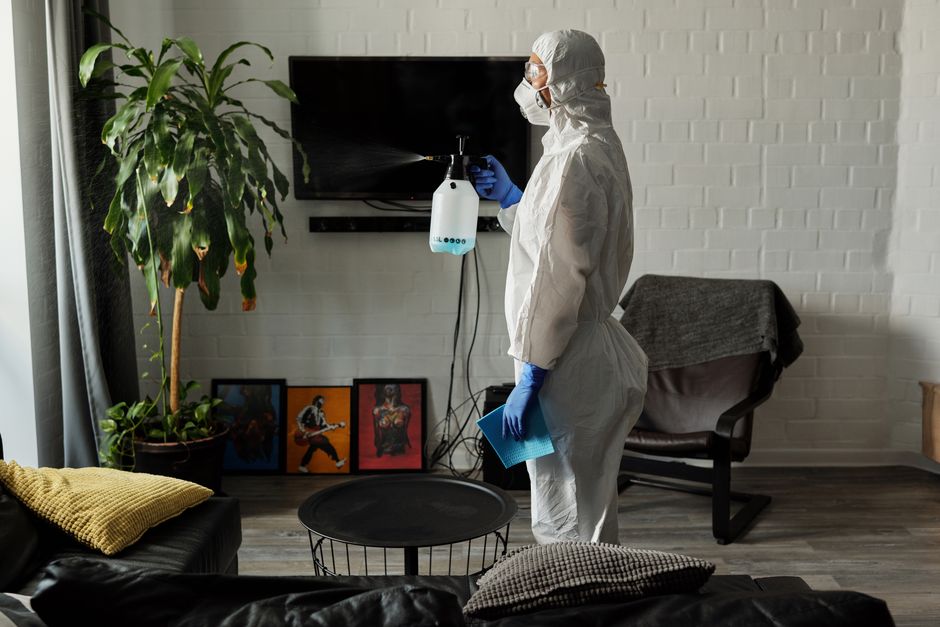
Why detailed tenancy cleaning Singapore teams remove dry dust before any wet scrub
Singapore humidity changes the order of operations. Indoor relative humidity often sits above the 60–70% band where mould germination begins, and dust mite densities in local homes can climb toward extreme levels — studies of atopic Singaporeans show sensitization rates around 77–81% for common house dust mite species (Chew et al., Clin Exp Allergy). Fine dust is not just an appearance problem. It is the material mould and mites use as a home.
A professional sequence starts dry. HEPA vacuuming lifts particles from floors, mattress bases if they remain, curtain tracks, wardrobe tops, ceiling corners, and the blades of fans before any cloth gets wet. Soft brushes and crevice tools reach the gaps along skirting and the runners of sliding doors. Only after that pass do teams move to degreasers on kitchen surfaces and descalers on bathroom tiles and grout. Wet work on a still-dusty surface turns powder into sludge. Dry-first work keeps residue from being pushed deeper into porous joins.
Anti-microbial treatment on bathroom silicone and grout matters here for the same climate reason. Scrubbing the visible black line is not enough if spores remain in the porous material and the room stays damp. Teams that understand local conditions allow proper dwell time for the product, rinse thoroughly, and leave windows or mechanical ventilation running so surfaces dry. Handing over a unit that is still wet is an invitation for mould to reappear within 24–48 hours — exactly the window many agents use between clean day and final inspection.
This is also where chemical choice shows up in family conversations. Parents and pet owners want hospital-grade disinfection without leaving harsh residues on floors where toddlers crawl. Eco-friendly descalers on grout, followed by disinfectants that are still family- and pet-safe once dry, close that gap. The goal is not a strong smell. The goal is a surface that does not regrow a grey line by the time the landlord walks in.
If you are comparing quotes, ask how the team sequences dry and wet work, and whether bathroom and kitchen sanitisation is included as standard rather than as a vague “deep clean” line item. That single question separates checklist operators from teams who have actually lost a handover argument over a damp silicone bead.
Room-by-room detail levels that still decide Singapore handover outcomes
Not every room costs the same time, and not every surface carries the same deposit risk. A useful way to plan is to rank rooms by how often they appear in deduction disputes and how long a proper pass takes in a typical 3-room HDB or 1-bed condo.
- The kitchen usually absorbs the longest stretch. Degrease the hob, control knobs, splashback, and the full cooker hood assembly including the filter mesh. Empty and wipe inside cabinets if the lease requires them bare. Pull out the fridge and washer where access allows so the floor and wall behind them are not left with a dust outline. Clean the inside of the microwave, the sink drain rim, and the bin cupboard that always smells faintly sweet after years of food waste.
- Bathrooms fail on grout, silicone, and chrome. Scrub floor and wall grout with a descaler that can lift soap scum without chewing the tile. Treat silicone joins rather than painting over them with bleach that only whitens temporarily. Descale taps, shower heads, and glass screens. Wipe the exhaust fan cover and the top of the mirror cabinet. Flush and brush the toilet including the hinge area and the base where urine salts crystallise.
- Bedrooms and living areas hide dust at height and at floor level. Vacuum mattress bases if still present, wipe wardrobe tops and the inside of empty drawers, clean window tracks, and dust air-con vents and ceiling fans. Skirting boards need a dry wipe then a damp finish. Sliding door tracks collect a black mix of grit and hair that agents notice the moment they open the balcony.
- Balconies, yards, and service yards in HDB units need their own pass. Sweep and mop floor tiles, wipe railings, and clear the drain cover so stagnant water is not left behind. Outdoor grime looks minor until it photographs as neglect next to an otherwise clean interior.
Time on site for a thorough end-of-tenancy job commonly runs four to eight hours depending on size and how empty the unit is. A three-person team finishes faster than a solo cleaner because one person can stay on dry dusting while another works wet kitchen and bathroom zones. Empty units photograph cleaner and clean faster; half-packed rooms force the team to work around cartons and leave more risk of a missed corner.
If you still have furniture in place, flag it early. Sofas, mattresses, and carpets hold the dust mite load that surface wiping never reaches. Many tenants book upholstery extraction as a separate line when the lease requires soft furnishings returned in good condition. That is a different craft from hard-surface tenancy work, but it sits in the same deposit conversation.
Paperwork, receipts, and the re-clean margin landlords still respect
Lease clauses often ask for professional cleaning and a receipt. Not every receipt carries equal weight. Agents look for a named company, a clear service description that matches end-of-tenancy or handover cleaning, and a date close enough to the inspection that the unit has not sat closed and humid for a week afterward. NEA-licensed operators with WSQ-certified cleaners and background-checked teams give landlords fewer reasons to argue about “who actually did the work.”
A 100% satisfaction policy with a re-clean guarantee matters more than marketing language suggests. Inspections happen on someone else’s schedule. If the agent flags a single bathroom join or a cooker hood filter you thought was done, you need a team that returns quickly rather than a dispute that drags into deposit mediation. Documented before-and-after photos from the clean itself also help if a later conversation turns tense.
Pricing context helps you judge quotes without guessing. Market ranges for end-of-tenancy work often sit around $290–380 for smaller HDB footprints and $400–500 for many 1-bed condo handovers, with larger units scaling higher (based on current 2024–2025 market rates — confirm with your provider as costs vary by unit size and condition). Extremely low quotes usually cut labour hours, skip dry-first dusting, or leave kitchen degreasing and grout work as “optional.” The deposit you are protecting is often larger than the gap between a thin quote and a thorough one. When you weigh cost against a possible $300–800 deduction, the arithmetic changes.
This is the point where bringing in a professional team like MCAAS Solutions changes the risk profile. You are not only buying labour hours. You are buying a sequence that matches Singapore humidity, a checklist aimed at the photos agents still take, and a paper trail your lease file can hold.
What tenants said after their handover inspections
“I engaged MCAAS Solutions Pte Ltd to do an end of tenancy cleaning. Gil and his team came to do the job and they are very professional indeed. The team members were meticulous, paid attention to details and possess very good attitude to my great satisfaction. These cleaning professionals are highly recommendable. Thank you for the excellent job done!”
— WM Yow
“Munisha and the team did a fantastic job, provided timely updates and replies! Would definitely recommend and come back to them!!”
— zhang qing
“Clean and good price. Options are flexible as well since they provide hourly option. My cleaner is Arun. Positive: Punctuality, Quality, Professionalism, Value Services: Moving-related cleaning”
— Jacklyn Tan
FAQs About Detailed Tenancy Cleaning in Singapore
What does detailed tenancy cleaning Singapore cover that a standard clean skips?
It covers the deposit triggers agents photograph: cooker hood interiors, bathroom silicone and grout, skirting boards, fan blades, wardrobe tops, window tracks, and the dry-dust pass before wet scrubbing. Standard housekeeping usually stays at standing-height surfaces and floors.
How early should I book before the handover inspection?
Book as soon as your move-out date is fixed, ideally with enough buffer for a re-clean if the agent flags a spot. Aim to finish the clean with time to ventilate and dry the unit for 24–48 hours in Singapore humidity before the walkthrough.
Will a professional receipt satisfy my landlord or agent?
Most leases accept a dated receipt from an NEA-licensed company that clearly states end-of-tenancy or handover cleaning. Keep a digital and printed copy with your key handover documents.
Can I stay while the team works, or does the unit need to be empty?
Empty units clean faster and photograph better. If some furniture remains, tell the team in advance so they can work around it and note any areas they could not fully access.
Are the products safe if I have children or pets moving between homes?
Look for teams that use eco-friendly descalers and hospital-grade yet family- and pet-safe disinfectants, with proper drying time before anyone moves back through the unit. Ask for product types if anyone in the household has chemical sensitivities.
What if the agent still finds a mark after the clean?
Choose a provider with a written re-clean guarantee. Send the agent’s photos immediately so the same team can return to the specific spot rather than arguing in deposit mediation.
Is DIY ever enough for a full deposit return?
Sometimes, if the unit is small, lightly used, and you have the tools and time for dry-first dusting plus full kitchen and bathroom sanitisation. In practice, most tenants underestimate height dust, grease film, and silicone mould — exactly the items that attract $300–800 deductions.
Conclusion
At MCAAS Solutions, we have seen the same deduction triggers across hundreds of HDB and condo handovers. Detailed tenancy cleaning Singapore work is not about making a flat smell like a hotel for an hour. It is about leaving surfaces that still look honest under close-up light, after a night of tropical humidity, when someone else holds the deposit decision. That quiet confidence — keys returned, checklist closed, no grey line waiting in the silicone — is what we aim to hand you at the door.
Contact us at +65 8834 2867, send a quick note on WhatsApp, or visit our end-of-tenancy cleaning service to book a detailed handover clean that protects your deposit.