Deep Cleaning, Home Maintenance, Indoor Air Quality
Deep clean house cleaning services
You wipe the top of the same kitchen cabinet twice in one week and the cloth still comes away grey. Not dramatic dirt. Just a thin film that settles again overnight, clings to the fan blades, and softens the white of the skirting into something dull. You vacuumed on Sunday. The floor looked fine. By Wednesday the soft furnishings feel dusty when you sit, and someone in the house has started sneezing the moment the air-con kicks on.
That is the gap most people notice before they ever search for deep clean house cleaning services. Regular tidying keeps surfaces presentable. It does not lift what Singapore’s climate packs into every fabric, joint, and high ledge. Average relative humidity sits around 84% year-round, with morning peaks that push higher. Once indoor RH stays above the 60–70% band, mould can germinate in 12–24 hours on damp grout, silicone, and cooler wall corners. Dust mites thrive above 70% RH and about 20°C. Densities can climb toward 10,000 per gram of dust, and local atopic sensitization rates for common house dust mite species sit in the high seventies to low eighties percent. Weekly wipe-downs never reach those layers.
Families feel it first as sniffles that refuse to clear, sticky kitchen grease that returns after every cook, bathroom silicone that darkens again within days, and a faint “closed flat” smell when you come home after a long weekend. HDB corridors and condo stack effects keep outdoor humidity pressing on doors and windows. Condensation after showers lingers. Construction dust from a neighbour’s reno rides the lift and settles in vents you cannot see without a ladder. Kids and pets live closer to floors and soft furnishings, so the allergen load hits them harder.
A proper deep clean is not a longer version of the same routine. It is a different job: dry removal of fine dust before any moisture is introduced, degreasing that actually breaks polymerised oil, grout work that reaches the porous body of the tile joint, HEPA extraction on mattresses and sofas, and anti-microbial treatment with enough dwell time to matter. The aim is a home that stays cleaner longer in 80–84% humidity—not a temporary shine that fades by the next wet spell. If you have been fighting the same spots for months, the rest of this piece walks through what that work actually involves, which zones decide the outcome, and how to tell when DIY has hit its ceiling.
The grey film, the sticky hob, and other signs you are past surface cleaning
Surface cleaning fails quietly. Floors still look acceptable under evening light. Cushions still look neat from the sofa. The problems sit one layer deeper, and Singapore humidity accelerates every one of them.
Watch for these patterns. Grease on the hob and rangehood that smears rather than lifts—oil that has baked through repeated cooking cycles and bonded to metal and enamel. Bathroom grout that looks permanently tea-stained even after bleach, because spores and mineral film sit inside the porous joint, not only on top. Ceiling fan blades with a felted edge of dust that becomes airborne the moment the fan spins. Skirting boards and door frames with a soft grey line at the top edge where vacuum nozzles never rest. Air-con vents and the filter mesh behind the front cover coated enough that airflow feels weaker than it should. Soft furnishings that smell faintly stale when you lean in, even after airing.
Health cues matter too. If someone in the household wakes congested more often, or the child who was fine outdoors starts coughing after an hour on the sofa, dust mite load and settled fine particulate are worth treating as a home problem, not only a personal one. Post-renovation flats add another layer: fine construction dust in high cabinets, behind the fridge, inside wardrobe tracks, and along window channels. Residents often say every time they think a surface is finally clean, it is not. That is not laziness. That dust is fine enough to re-suspend with ordinary movement and humidity swings.
Landlords and picky agents notice a shorter list—greasy stovetops, moulded grout, dusty fans, skirting, and toilets that still show old staining—and those alone drive deposit deductions in the hundreds. Homeowners living in the unit notice the same list plus the air quality and the “why does this keep coming back” fatigue. When those signs stack, more of the same weekend wiping rarely changes the baseline. You need a method that removes the reservoir, not only the visible top coat.
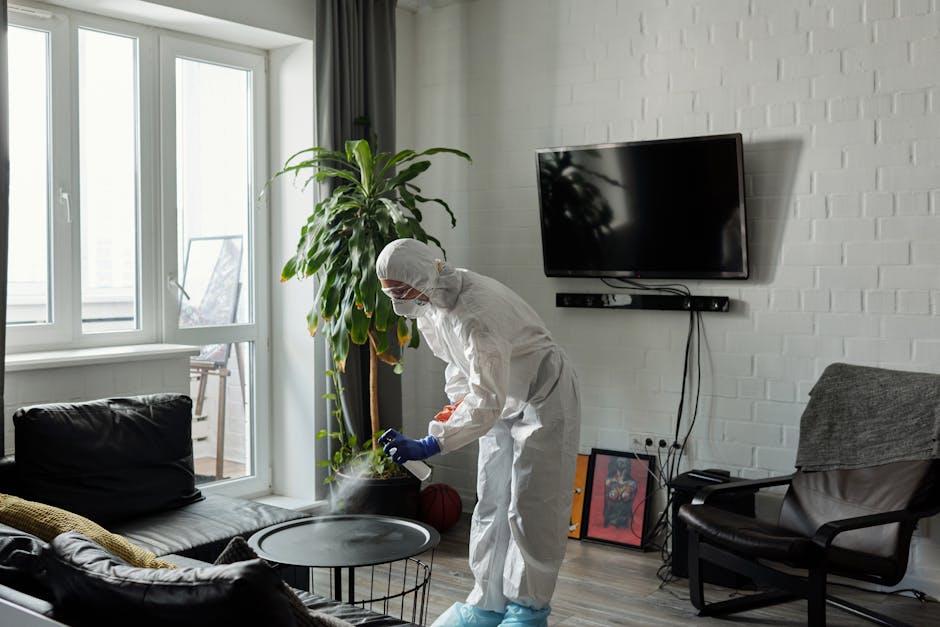
Why dry dust removal has to come before any wet wipe in 84% humidity
The sequence is the part most DIY attempts reverse. People spray first, wipe second, and feel productive because surfaces look wet and busy. In a humid flat that order can smear fine dust into a paste, push spores deeper into grout, and leave moisture sitting in corners long enough for mould to restart within a day or two.
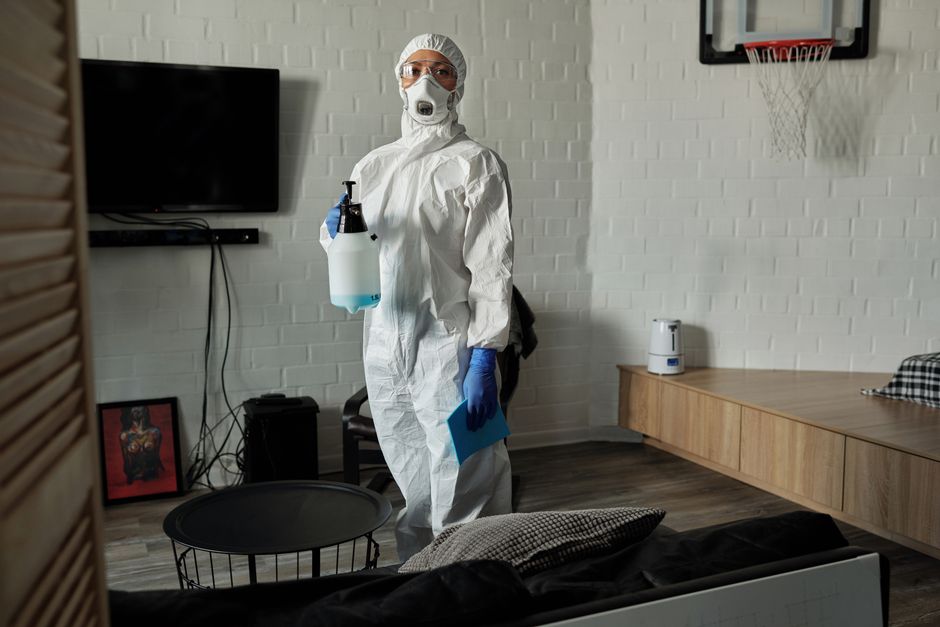
A professional deep clean runs the other way. Dry work first: HEPA vacuuming of floors, edges, upholstery, mattresses, curtains where needed, and high surfaces so particulate is captured rather than redistributed. Soft brushes and crevice tools for tracks, skirting, switch plates, and the backs of appliances. Only after loose dust is out do degreasers, descalers, and disinfectants go on. Products need proper contact time. Eco-friendly descalers on grout and tiles need minutes, not a quick splash-and-rinse. Hospital-grade yet family- and pet-safe disinfectants need the dwell the label requires. Rush that step and you get fragrance without kill.
Drying is half the job in Singapore. Leave a bathroom “clean but damp” and you have handed mould a fresh start. Good teams work in a way that leaves surfaces wipe-dry, recommend ventilation for 24–48 hours after heavy wet work, and treat silicone and cooler wall zones with anti-microbial attention rather than a cosmetic wipe. Fans, exhausts, and open windows help; a dehumidifier after a heavy bathroom reset is often the difference between a clean that holds and one that greys out again by the weekend.
This is also where tool quality shows. Ordinary uprights recirculate fine dust. HEPA filtration keeps what you lift out of the air. Upholstery and mattress extraction reaches the fibre depth weekly vacuuming never touches. Kitchen degreasing is not dish soap on a sponge; polymerised oil needs the right chemistry and mechanical action on the rangehood filters, splashbacks, and the sides of the cooker that catch the aerosol every time you fry. None of that is glamorous. All of it is why a flat can look “already clean” to a casual glance and still feel different after a real deep clean.
If you have tried the reverse order for months and the same corners keep winning, this is usually the reason. Method beats effort when humidity is the constant.
Kitchens, bathrooms, soft furnishings, and the high zones that run the house
Not every room carries equal weight. In Singapore homes the outcome of deep clean house cleaning services is usually decided in five zones.
- The kitchen sets the tone for the whole flat. Degrease the hob, knobs, rangehood interior and filters, splashback, and the cabinet faces beside the cooker. Pull out what can be moved safely and clean the sides and floor edges where oil and crumbs collect. Inside cabinets above the stove collect a sticky film that weekly cleaning never sees.
- Bathrooms decide mould risk. Scrub grout and tile faces with proper descalers, treat silicone edges, descale taps and shower screens, and sanitise toilet base, hinges, and the floor perimeter. Dry thoroughly. A bathroom left damp is a 24-hour problem waiting to restart.
- Soft furnishings hold the allergen load. Mattresses, sofas, and cushions trap skin cells and mite colonies. HEPA vacuuming plus extraction where fabric allows cuts the reservoir that air-con simply circulates. Families with children or known dust-mite sensitivity feel this zone first.
- High and hidden surfaces re-seed everything below. Ceiling fans, pelmets, the tops of wardrobes, air-con casings, exhaust grilles, and the upper edges of doors. Dust here drops every time the fan or air-con runs. Skip it and the floor looks dirty again within days.
- Edges and transitions. Skirting, door frames, window channels, sliding-door tracks, and the strip behind the fridge. These are the lines agents photograph and the places humidity stains first. They also catch the fine grit that scratches floors if it stays.
Living rooms and bedrooms still need full attention—floors, under furniture that can be shifted, switches, and reachable walls—but if kitchen grease, bathroom mould, soft furnishings, and high dust are handled properly, indoor air and the “fresh flat” feel usually follow. HDB layouts concentrate cooking and bathing moisture in compact footprints, so those rooms report the climate faster than a larger landed home. Condos add shared-corridor dust and sealed envelopes that keep indoor RH high when the air-con is off.
A thorough team works room by room with that priority order in mind rather than a random circuit of easy surfaces. Expect several hours for a full home, often a multi-person crew so wet and dry tasks can run without one person chasing the same cloth all afternoon. When you want that level of reset without spending your entire weekend on a ladder, a structured service such as MCAAS Solutions’ deep cleaning packages is built around those zones rather than a generic “whole house wipe.”
How often deep clean house cleaning services make sense for busy HDB and condo homes
There is no single calendar that fits every household, but patterns repeat. Homes with heavy cooking, young children, pets, or someone with allergic rhinitis usually need a full deep clean more often than a lightly used one-bedroom. After any renovation or major furniture move, one thorough pass is almost non-negotiable because fine dust will keep resurfacing for weeks if it is only chased with a domestic vacuum. Between tenancies the bar is higher still—deposit-facing standards leave less room for “it looks okay from the sofa.”
As a working rhythm for ordinary family life in Singapore humidity, a practical guide is a comprehensive deep clean every 3–4 months for households with young children, pets, or allergy sufferers; every 6 months for a lightly used unit with good daily ventilation—then maintain with ordinary housekeeping in between. This is a guide, not a fixed rule. Waiting until mould is obvious on silicone or until the rangehood filters drip is waiting too long; by then you are paying to reverse growth that started in the first damp 12–24 hours. Quarterly or half-yearly deep work, timed before wetter stretches or after a period of heavy use, keeps the reservoir down so weekly cleaning can actually hold.
Cost objections are fair. Cheaper quotes exist across a market with well over a thousand NEA-licensed cleaners. What usually separates a useful deep clean from a disappointing one is not the brand name on the invoice—it is whether the team is background-checked and consistent, whether they bring HEPA equipment and the right chemistry, whether kitchen and bathroom get real dwell time, and whether there is a re-clean path if something was missed. Transparent scope beats a low number that quietly skips fans, grout, or under-appliance edges. For families, product safety matters as much as strength: hospital-grade disinfection that is still suitable around kids and pets is the balance you want, not a cloud of harsh fumes and an open window for three days.
DIY still has a place. You can keep tops clear, run the vacuum on a schedule, and wipe bathrooms after showers so moisture does not sit. What DIY rarely matches is the combination of access (moving heavy pieces safely), extraction depth, degreasing power, and multi-room pace in a single day. When the grey film returns faster than you can chase it, the honest next step is a professional pass that resets the baseline, then a simpler maintenance habit on top.
What Customers Say
Here is what clients in HDB flats and condos say after a full reset.
“The kitchen grease on the rangehood and splashback finally came off properly, and the bathroom grout looks light again instead of permanently stained. Dust on the fans and skirting was gone too. Highly recommended. Positive: Punctuality, Quality, Professionalism Services: Deep clean”
— Sanjeev
“Mercy, Amandeep, Dulina, Blessing were assigned to carry out post tenancy cleaning of my apartment. They did an excellent job and the apartment was completely cleaned. They also scrubbed and removed all the stains in the toilet which had accumulated over two decades. Highly recommend to engage MCAAS for home cleaning jobs.”
— Patrick Lee
“Munisha and Team did the cleaning They arrived very timely and did a great job cleaning. Also very friendly! Would definitely recommend”
— Khan Muhammad Saqiful Alam
“My son’s sneezing settled after they HEPA-vacuumed the mattresses and sofa and cleared the fine dust from the high cabinets. Kitchen and grout work were thorough as well. Positive: Punctuality, Quality, Professionalism, Value Services: Deep clean”
— Jacklyn Tan
FAQs About Deep Clean House Cleaning Services
What is included in deep clean house cleaning services that a regular clean skips?
A deep clean targets built-up grease, porous grout, high dust on fans and cabinet tops, skirting and tracks, under and behind movable appliances, and often mattress or upholstery extraction. Regular cleans maintain what is already under control; deep cleans remove the layers humidity and daily living pack into joints and fabric.
How long does a full deep clean take in a typical HDB or condo?
Most compact to mid-size homes take several hours with a small team rather than one person racing the clock. Kitchens and bathrooms drive the timeline because degreasing and descaling need proper contact time, and surfaces should be left as dry as practical before the crew leaves.
Will a deep clean stop mould from coming back in Singapore humidity?
It removes active growth and much of the surface spore load, and anti-microbial treatment plus thorough drying slow the restart. It cannot change outdoor humidity. Ventilation after showers, fixing leaks, and not leaving wet towels and silicone permanently damp still matter between professional visits.
Are the products safe for children and pets?
Our teams use hospital-grade disinfectants that are certified eco-friendly and safe around children and pets. We confirm dwell times with you before starting and advise when it is safe to bring pets back into treated areas.
How often should I book deep clean house cleaning services?
Many busy households benefit every few months, with extra sessions after renovation dust, heavy festive cooking, or before and after tenancy changes. Homes with allergy sufferers or pets often shorten the gap; lightly used units can stretch it if weekly maintenance is solid.
Why does dust seem worse right after I clean?
Disturbing settled fine dust without HEPA capture puts particulate back into the air, and humidity helps it re-settle on the next cool surface. Dry HEPA removal first, then controlled wet work, reduces that bounce-back effect.
Do I need to be home the whole time?
Many clients stay for the start to walk through priorities, then leave once they are comfortable with the team. Use insured, background-checked crews, agree access and parking in advance, and keep valuables secured as you would for any home service visit.
Conclusion
We at MCAAS Solutions have spent more than seven years inside Singapore homes where the real enemy is not yesterday’s crumbs—it is the quiet stack of grease, mite dust, and humidity that makes a flat feel tired even when the floor is swept. A deep clean should give you back air you notice and surfaces that stay honest for longer than a weekend. That is the standard our NEA-licensed, WSQ-certified teams work to, with hospital-grade yet family-safe products, HEPA-led dry work before wet, and a 100% satisfaction policy backed by a re-clean guarantee.
If the grey film, the sticky hob, or the bathroom grout has been winning, we are ready when you are. Contact us at +65 8834 2867, send a quick note on WhatsApp, or visit MCAAS Solutions to book deep clean house cleaning services that reset the home you actually live in.