Deep Cleaning, HDB Living, Health & Allergies
The Dust Mite Layer Singapore Deep Cleans Rarely Reach
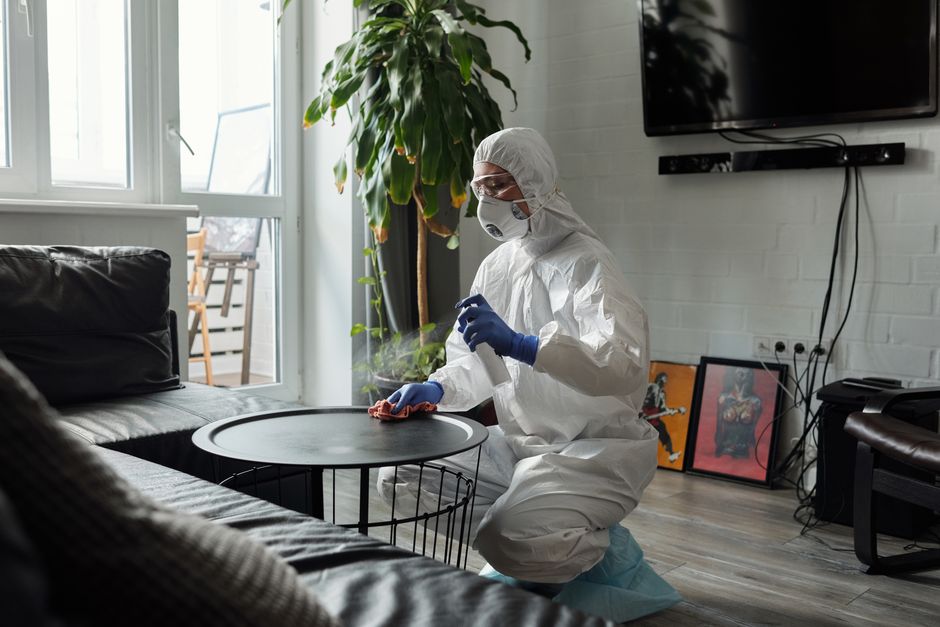
A couple in a four-room HDB at Bishan noticed their four-year-old’s night cough returning exactly twelve days after they spent a weekend scrubbing every visible surface. They had moved furniture, vacuumed the mattresses, and wiped the skirting boards, yet the air still felt heavy. The problem was not the work they skipped; it was the layer they could not see. Deep cleaning that actually lasts must reach the biological film humidity leaves behind within 24 to 48 hours.
Singapore’s 80–84 % humidity keeps dust mites and mould spores active year-round inside both HDB flats and condo units. A standard wipe-down removes the dust you can see, but it leaves behind the microscopic colonies that settle into fabric, foam, and the narrow gaps around air-con coils. Two weeks later the same conditions return, and so do the odours and allergy symptoms. The difference shows up most clearly in homes where children or elderly parents spend long hours indoors.
Professional teams that specialise in deep cleaning approach the job as a series of targeted extractions rather than one long surface pass. They use equipment that pulls embedded particles out of upholstery instead of pushing them deeper, and they apply hospital-grade disinfectants formulated to leave no residue that pets or toddlers can pick up later. The result is not just a cleaner-looking room but a measurable drop in the irritants that trigger reactions.
Consider a three-room condo in Toa Payoh where the owners attempted their own deep clean using a rented steam cleaner and off-the-shelf disinfectant. They focused on floors, countertops, and sofa tops during a long weekend. Within ten days the toddler’s eczema flared again because the steam had only loosened surface grime on the mattress while pushing mites deeper into the foam layers. The family later learned that extraction must follow loosening, and that household steam units rarely reach the temperatures or suction needed to kill colonies in place. They also discovered the hidden cost of incomplete drying: residual moisture from the steam actually accelerated mould regrowth along the window tracks they had wiped earlier.
How 80–84 % humidity resets visible cleaning in 48 hours
High moisture turns any porous surface into a breeding ground. Mattress seams, sofa cushions, and the felt backing of curtains hold enough water vapour for dust mites to multiply rapidly. When a family cleans only what they can reach with a cloth and household spray, the mites simply retreat deeper into the material and re-emerge once humidity climbs again. The cycle explains why many homeowners feel their place never stays fresh for long after a weekend effort.
The same moisture encourages mould spores to colonise the rubber seals around refrigerator doors, the plastic tracks of sliding balcony doors, and the narrow space behind the kitchen sink cabinet. These spots rarely receive enough airflow for natural drying, so colonies re-establish quickly. A proper deep cleaning session includes lifting or shifting heavy items to treat these hidden edges directly.
One family in a five-room HDB at Ang Mo Kio learned this the hard way after their own attempt. They spent two full days moving the sofa, vacuuming behind it, and wiping every skirting board. Two days later the musty smell returned because the back wall of the under-sink cabinet had not been reached; the humidity there had allowed fresh spores to settle on the remaining film. They realised too late that shifting appliances requires both physical effort and a second pass with extraction tools once the area is exposed. The hidden cost was not just the extra weekend lost to re-cleaning, but the decision fatigue that led them to stop short on the first attempt, leaving the biological layer intact.
Operational data from humidity monitoring in typical HDB living rooms shows relative humidity rarely drops below 78 % even with air-conditioning running intermittently. This sustained range means any surface that retains even a thin water film becomes viable for mite reproduction within a single day. Teams that succeed track this by checking moisture levels in fabrics before and after extraction, aiming for a measurable reduction rather than relying on visual inspection alone.

Hidden zones in a 4-room HDB that most weekend efforts miss
Start with the upholstered furniture. Without an extraction machine, surface vacuuming removes loose dust but leaves the fine particles that have worked into the weave. The same limitation applies to mattresses: seams and tufts trap debris that ordinary vacuum heads cannot pull out. Air-conditioner coils and the drip trays beneath them collect a film that circulates spores every time the unit runs.
Under-sink cabinet backs and the narrow gap between the washing machine and the wall are equally neglected. These areas stay damp and dark, perfect conditions for mites and mould. Moving appliances and cabinets to reach them is physically demanding and time-consuming, which is why many residents stop short. The extra steps separate a surface tidy from a deep cleaning that actually interrupts the biological reset.
A realistic failure mode appears when residents attempt to clean air-con coils without isolating the unit first. Dust and biofilm loosened during wiping simply drop into the drip tray and get redistributed the next time the compressor starts. The same issue occurs with curtain linings: without detaching and running them through an extraction process, the embedded spores remain sheltered from surface sprays. These trade-offs compound in smaller HDB layouts where storage space limits the ability to move items far enough for proper access.
Successful operators follow a sequence that begins with identifying the highest-moisture zones using a simple moisture meter before any product is applied. They then extract, disinfect, and allow forced drying with fans positioned to reach the newly exposed surfaces. This adds roughly 90 minutes per room compared with casual wiping, yet it prevents the rapid rebound that forces repeat work within two weeks.
Extraction plus disinfection versus ordinary wiping
Ordinary cleaning relies on friction and household products. Deep cleaning adds mechanical extraction to lift embedded matter and targeted disinfectants that neutralise what remains. The disinfectants must be NEA-approved yet safe for fabrics and breathing spaces, a combination that requires both the right formulation and careful application. Without extraction, the disinfectants sit on top of the grime rather than reaching the colonies underneath.
Families who attempt this level of work themselves often discover that the equipment rental, the physical strain of shifting heavy pieces, and the uncertainty about product choices outweigh the perceived savings. The operational reality is that consistent results depend on both the tools and the judgment to know which material needs which treatment.
One measurable difference lies in post-clean particle counts. Homes that receive only surface wiping typically show a 30–40 % temporary drop in airborne allergens, while extraction-plus-disinfection sessions achieve reductions closer to 70 % that hold for four to six weeks under normal Singapore humidity. The gap arises because ordinary sprays cannot penetrate the protective biofilm that mites and spores form inside foam and fabric fibres.
Another practical consideration is residue management. Hospital-grade products formulated for low-residue application still require a final rinse or wipe on non-porous surfaces to avoid attracting new dust. Residents who skip this step often notice surfaces feeling slightly tacky within days, which then traps fresh particles and restarts the cycle. The judgment call here is knowing when a surface needs that extra rinse versus when the disinfectant can remain bonded safely.
What Customers Say
“2 thumbs up for Suria and her fantastic team! They transformed the entire place and its now sparkly and shiny. Its like magic!! No one can ever clean like them. Highly recommended! Positive: Responsiveness, Quality, Professionalism, Value Services: Deep clean, Moving-related cleaning”
— Cally Chua
“Positive: Punctuality, Quality, Professionalism, Value Services: Deep clean, General housekeeping, Moving-related cleaning, Standard cleaning, Interior & exterior window cleaning”
— kokilam veera
“Munisha and her team were very professional when it came to the handover cleaning that they did of our condo unit. Everything was meticulously cleaned. I would highly recommend their service.”
— Bhavna Thyagarajan
“Munisha and Team have done a great job in providing professional newly renovated cleaning at my apartment. They are meticulous and combed every corner, leaving the house fresh and clean. They are responsible and listen to all my requests. This is my second time using them and will continue to use them for future needs. Thank you Munisha.”
— CP
FAQs About deep cleaning
How often should deep cleaning happen in a Singapore HDB or condo?
Most households benefit from a full deep cleaning every four to six months, with more frequent attention to high-traffic upholstery and mattresses if allergies are present.
What makes deep cleaning different from regular housekeeping?
Regular housekeeping maintains visible surfaces. Deep cleaning uses extraction equipment and material-specific disinfectants to remove the embedded layer that humidity allows to rebuild within 48 hours.
Can I achieve the same results with rented equipment?
Rented machines help with surface extraction, yet they rarely include the hospital-grade disinfectants or the trained judgment needed for hidden crevices around air-con coils and cabinet backs.
Is deep cleaning safe for homes with pets and young children?
When performed with family- and pet-safe products that leave no residue, the process reduces irritants rather than introducing new ones.
Does deep cleaning remove existing mould?
It removes surface mould and the conditions that allow regrowth when the work includes proper drying and disinfection of damp zones.
Will one session stop allergy symptoms permanently?
A single thorough session lowers the load significantly, but ongoing vigilance and periodic professional visits are required because Singapore’s humidity never stops creating new colonies.
Conclusion
We at MCAAS Solutions have watched the same pattern repeat across hundreds of HDB and condo units: visible effort without extraction and disinfection simply resets the clock for another two weeks. Our team brings the equipment and the certified products that reach the layer ordinary weekend cleaning cannot touch. This week, pull one piece of upholstered furniture away from the wall and check the floor edge behind it; if you see fine grey dust that refuses to lift with a normal vacuum, you already know why the air still feels heavy. We at MCAAS Solutions handle the full sequence so you do not have to carry the operational burden yourself. Reach us at +65 8834 2867.