Do you need hospital-grade disinfectant in your home?
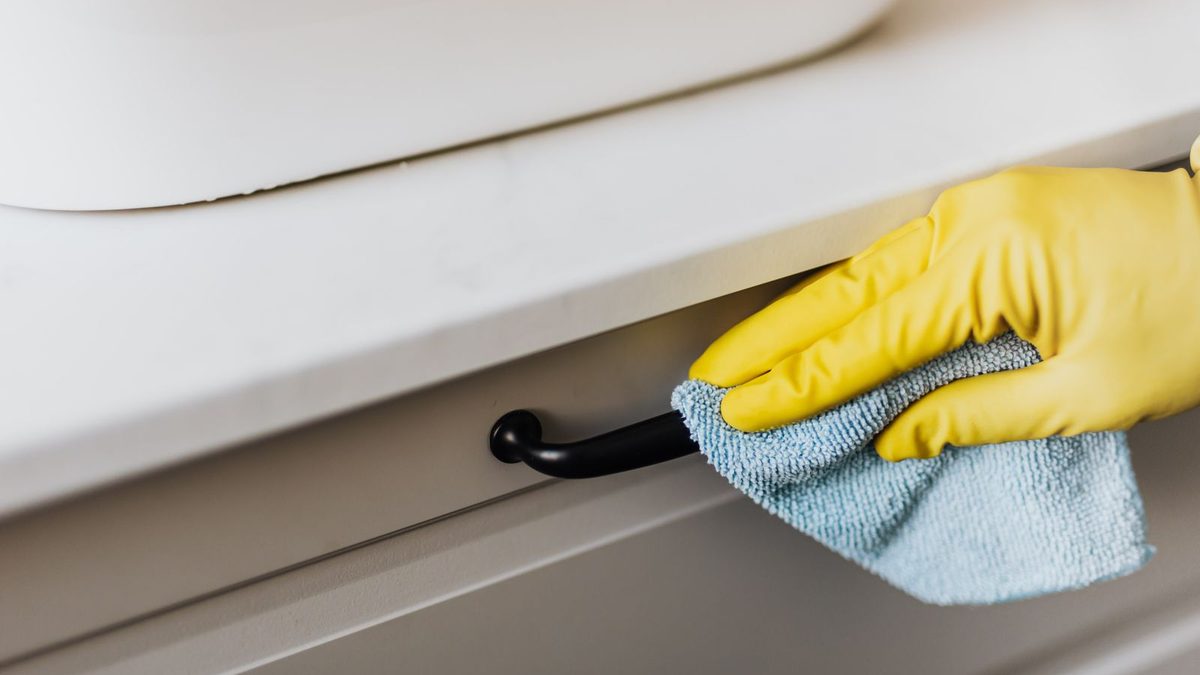
The light switch beside the hob still feels slightly tacky. You already wiped it after last night’s chilli crab, yet the plastic is dull, the fingerprint ridge is still there, and someone in the house has a cough that has lasted three days. That is the moment most of us reach for whatever bottle is under the sink. Lemon, “antibac,” a supermarket spray that smells like a hotel corridor. It looks busy. It rarely matches what a humid HDB or condo actually needs.
Hospital grade disinfectant home cleaning is not a scent. It is a contact-time job: the right chemistry, left wet long enough, on the surfaces hands actually touch, in a climate where relative humidity sits in the high 70s to 80s percent outdoors for much of the year. Indoor particulate levels in poorly ventilated HDB flats can run two to five times higher than outdoor air, according to EPA indoor air quality data - and Singapore's outdoor baseline is already elevated by traffic and humidity. Dust mites thrive year-round. Bathroom mould can show within 24 to 48 hours if tiles stay wet and the exhaust fan is off. A wipe that evaporates in ten seconds does not interrupt that loop.
Families with toddlers, elderly parents, or anyone recovering from a stomach bug feel this first. High-touch zones in a compact 4-room layout are dense: door handles, remote controls, fridge handles, toilet flush, phone chargers on the dining table, the bomb-shelter light switch nobody thinks about. Open-concept kitchens push grease film onto living-room switches. Indoor laundry drying lifts whole-flat humidity. You can mop until the vinyl shines and still leave a film of organic soil that protects germs from a weak spray.
This piece is a practitioner’s map, not a lecture. You will see where hospital-grade products earn their keep, where eco-friendly family- and pet-safe cleaners should stay on stone and children’s rooms, and a weekend sequence you can run without turning the flat into a clinic. If the job is bigger than a Saturday, you will know which rooms to hand to a trained crew rather than fighting the bottle alone.
Why a lemon spray dries too fast on a humid HDB switch plate
Most household “antibac” sprays are detergents with a perfume and a modest alcohol or quaternary ammonium load. They cut light grease. They do not stay wet. In 80 to 84 percent outdoor humidity, the film on a plastic switch plate is mixed: cooking oil, skin oils, corridor dust. If you spray and immediately wipe dry, you have moved the soil, not killed what is sitting in it. Contact time is the unglamorous rule. Read the label. Many hospital-grade disinfectants need one to ten minutes of visible wetness. If the plate looks dry at 20 seconds, you never started.
Soil load matters more than brand. A cooker-hood mesh that is caked solid is the single biggest source of grease smell in many kitchens; that same aerosol lands on nearby switches. Disinfectant on top of grease is theatre. Degrease first, then disinfect. The same logic applies to bathroom silicone that has already greyed. You cannot “hospital-grade” your way through a biofilm that needs mechanical work and then a drop in indoor RH below about 60 percent.
Room type changes the bottle. Neutral pH cleaners (around 6 to 8) belong on marble, granite, and some quartz in condos. Harsh wrong products etch stone permanently. Kids’ rooms and pet zones want family- and pet-safe products after the dwell time, with extra rinse on floors where a toddler crawls. Hospital-grade chemistry still has a place on toilets, taps, and door handles after illness. Quaternary ammonium compounds (quats) at 0.1-0.2% or sodium hypochlorite at 1,000 ppm are the two most accessible hospital-grade actives in Singapore; look for them on the HSA or NEA permitted disinfectants list rather than trusting front-label claims. Scent is not proof. Residue and humidity control decide whether the job lasts past Monday.
If you have already tried Magiclean-style routines and the cough or the amoy kulol in the bomb shelter keeps returning, the gap is usually process, not willpower. That is where a scoped one-time deep clean with trained dwell times beats another impulse spray.
Which rooms actually need hospital-grade product - and how long to leave it wet
Think in three layers. Layer one is soil removal: vacuum, degrease, rinse. Layer two is disinfection with stated contact time on non-porous high-touch points. Layer three is humidity so the win does not reverse in 48 hours: exhaust 15 minutes after showers, squeegee glass and wall tiles on the 30-second rule, leave a 5 to 10 cm gap behind wardrobes on exterior walls, and run a dehumidifier 4 to 6 hours in problem rooms toward 55 to 60 percent RH. Bomb shelters have near-zero designed airflow; a closed door is a moisture trap, not a hygiene strategy.
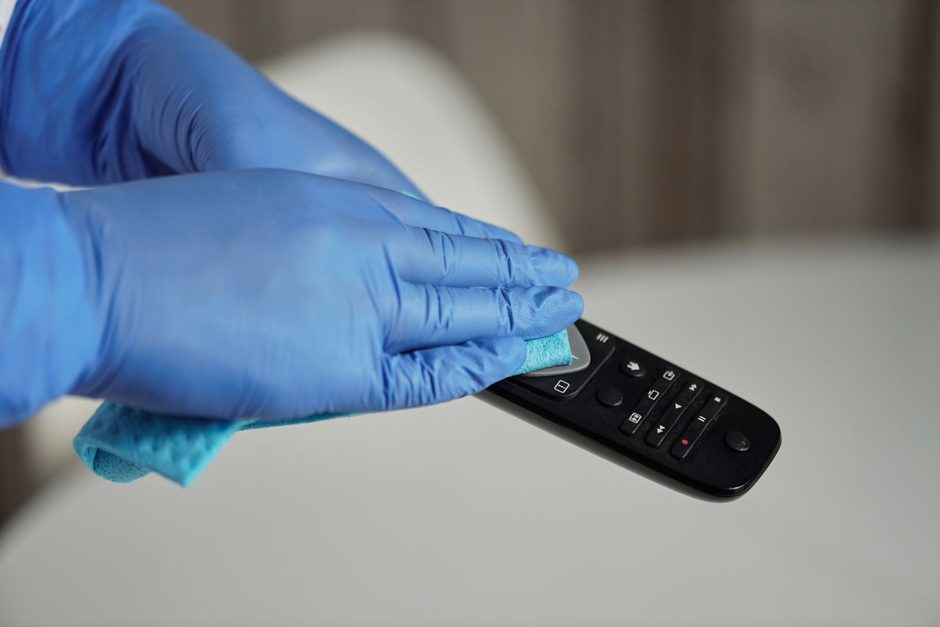
Prioritise toilets, kitchen handles, light switches, remote controls, and the washing-machine fascia in the service yard. Skip soaking wooden shelves, leather, and unfinished timber in hospital-grade product. Those need dry wiping, airflow, and moisture control. Mattresses and sofas are fabric problems, not bleach problems. Indoor air after a whole-house reset in allergy homes has been measured with large drops in surface allergens and mite load when the work is top-down and thorough, not a pail-and-cloth pass.
Never mix bleach and ammonia. Never fog a occupied children’s room “for extra safety.” Ventilate. Follow label dilution. Wear gloves. If someone in the household is asthmatic, choose unscented hospital-grade options and keep windows cracked after the dwell, even if the monsoon is loud on the grille.
A Saturday high-touch sequence you can finish before dinner
Set a 90-minute window. Declutter surfaces first so you are not disinfecting under yesterday’s mail. Change mop water when it tans; dirty water redistributes soil.
- Open windows on the less rainy side and run toilet exhaust. Pull aircon filters if they have not been rinsed in two to four weeks of daily use; clogged filters dump dust back onto the switches you are about to treat.
- Degrease kitchen handles, hob surround, and the cooker-hood exterior. Soak metal mesh filters in hot soapy water if they have gone more than one to two weeks of stir-fry. Do not disinfect a greasy mesh and call it done.
- Spray high-touch non-porous points with your hospital-grade product: switches, door levers, fridge and microwave handles, tap levers, flush buttons, remote backs, phone chargers, the bomb-shelter switch. Leave them visibly wet for the full labelled minutes. Do not hero-wipe at 15 seconds.
- Work bathrooms last among wet rooms. Squeegee tiles. Treat grout as mechanical plus product, not spray-and-hope. Run the fan another 15 minutes after you finish.
- Rinse or wipe residues on floors where toddlers crawl, using the family-safe follow-up the label allows. Wash cloths hot. Do not leave a damp mop pad overnight; in this humidity it smells like wet dog by morning.
- Note any white bloom in wardrobes or musty service-yard traps. Those need airflow and possibly a longer professional reset, not a second perfume spray.
If you run out of time, stop after handles and toilets. Those two clusters move more risk than a decorative wipe of skirting that already looks clean from the sofa.
Kids, pets, stone worktops, and when to stop DIY
A 3-room flat after a stomach bug is a different job from a vacant 5-room that sat empty for months. Illness: focus toilets, taps, switches, and the dining table, then laundry of cloths. Vacant or post-reno dust: disinfection on top of residual gypsum is wasted; dust has to leave tracks, upper cabinets, and window grilles first. Joint-issue households need fans and high dust done properly, not a two-step ladder excuse.
Stone and laminate are not universal. Multipurpose spray is how condo kitchens get etched. Ask for pH-appropriate products. Pets: keep them out of the wet zone until dwell and rinse are done. Robots help floors and still fail HDB toilet kerbs, sticky post-fry film, and bomb-shelter corners. Respect the S$1,200 machine; do not expect it to replace chemistry and hands.
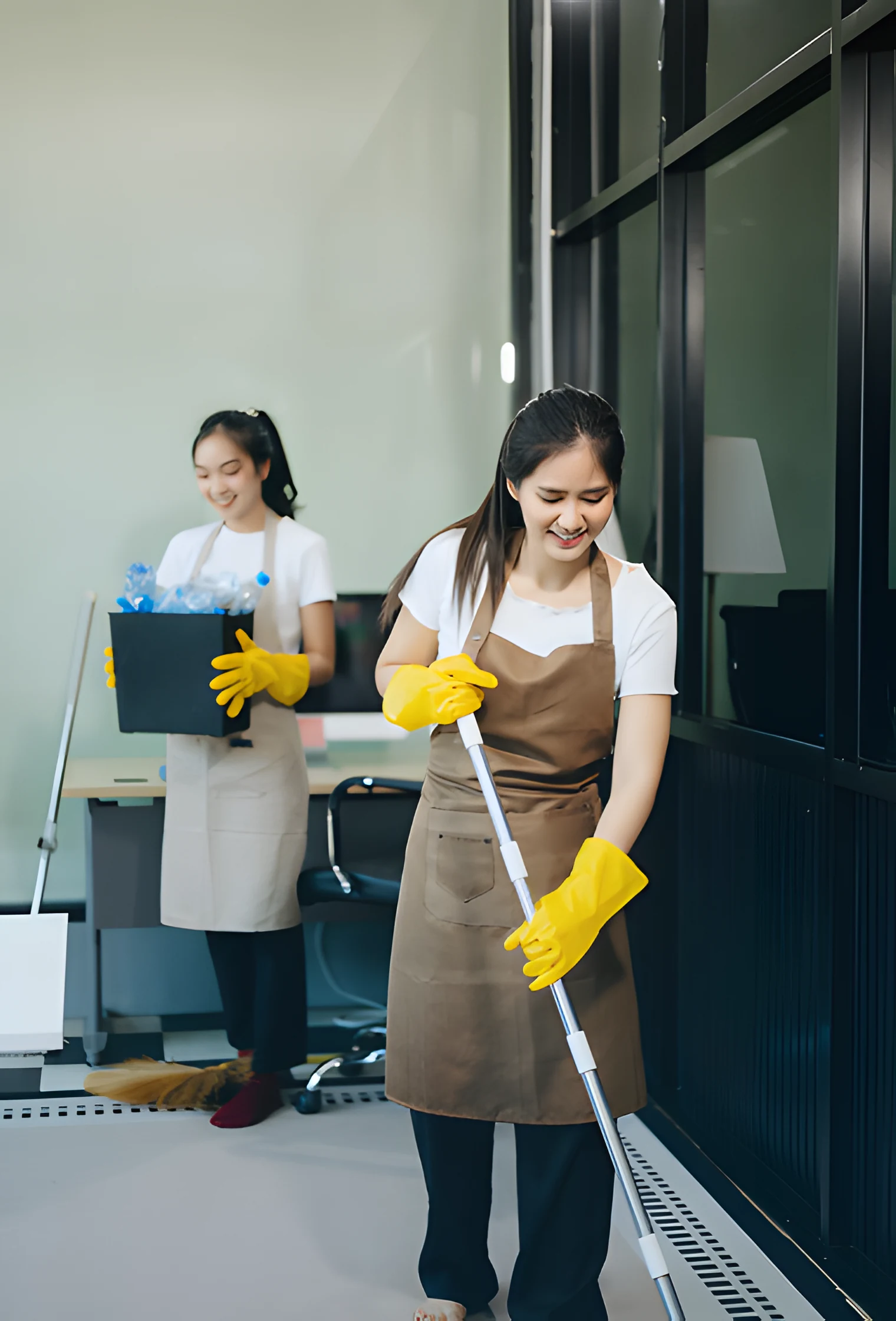
Stop DIY when mould is inside silicone at scale, when mattress staining will not lift, or when you are fogging because you are scared rather than following a label. A WSQ-trained crew with hospital-grade and eco-friendly options, written scope, and a walkthrough is the rational next step, not another Carousell bottle.
That is the standard our crews train to: surfaces that pass a white-glove check, not just a corridor that smells like pine.
Common questions about disinfecting your home
Is hospital grade disinfectant home cleaning safe with young children at home?
Yes if you follow label dilution, keep kids out during dwell, ventilate, and rinse floors they crawl on. Use family- and pet-safe products on toys and cot rails; reserve stronger hospital-grade liquids for toilets and handles after illness.
Does a strong smell mean the flat is actually disinfected?
No. Perfume is not kill time. Many effective products are low-odour. If the surface dried in seconds, the job did not start, whatever it smelled like.
Can vinegar replace a hospital-grade product after a stomach bug?
Vinegar is a light cleaner. It is not a substitute on toilets and handles after gastroenteritis. Degrease, then use a labelled disinfectant with full contact time.
How often should we disinfect switches in a dual-income HDB?
Weekly on high-touch points is enough for a well household, plus extra cycles after illness or guests. Humidity still demands bathroom drying every shower, not only weekend sprays.
Will this stop wardrobe mould in the monsoon?
Not by itself. Mould needs RH below about 60 percent, airflow, and furniture gaps. Disinfectant treats surfaces; it does not dry concrete bomb shelters.
Should we stay in the room while products dwell?
Step out of small bathrooms. Crack a window. Do not occupy a fogged space. Gloves on, cloths washed after, pets elsewhere until dry.
When is a professional team the better spend?
When grout is black, the hood mesh is solid, the unit sat vacant, or you cannot give labelled dwell plus a real degrease on the same Saturday. Ask for a written scope, supplies brought, and pay after you see the work.
Conclusion
We at MCAAS Solutions have watched too many good Saturday intentions fail because the bottle dried before the germs did. Hospital grade disinfectant home cleaning only pays off when soil comes off first, contact time is respected, and the flat is dried like a tropical home, not a temperate brochure. That is the standard our crews train to: surfaces that pass a white-glove check, not just a corridor that smells like pine.
If you want that reset without spending the weekend on switch plates, contact us at +65 8834 2867, send a quick note on WhatsApp, or visit our spring cleaning service for a written quote and a humidity-honest deep clean.