Home Maintenance , Cleaning Tips
Why Bishan aircon dust returns weeks after cleaning

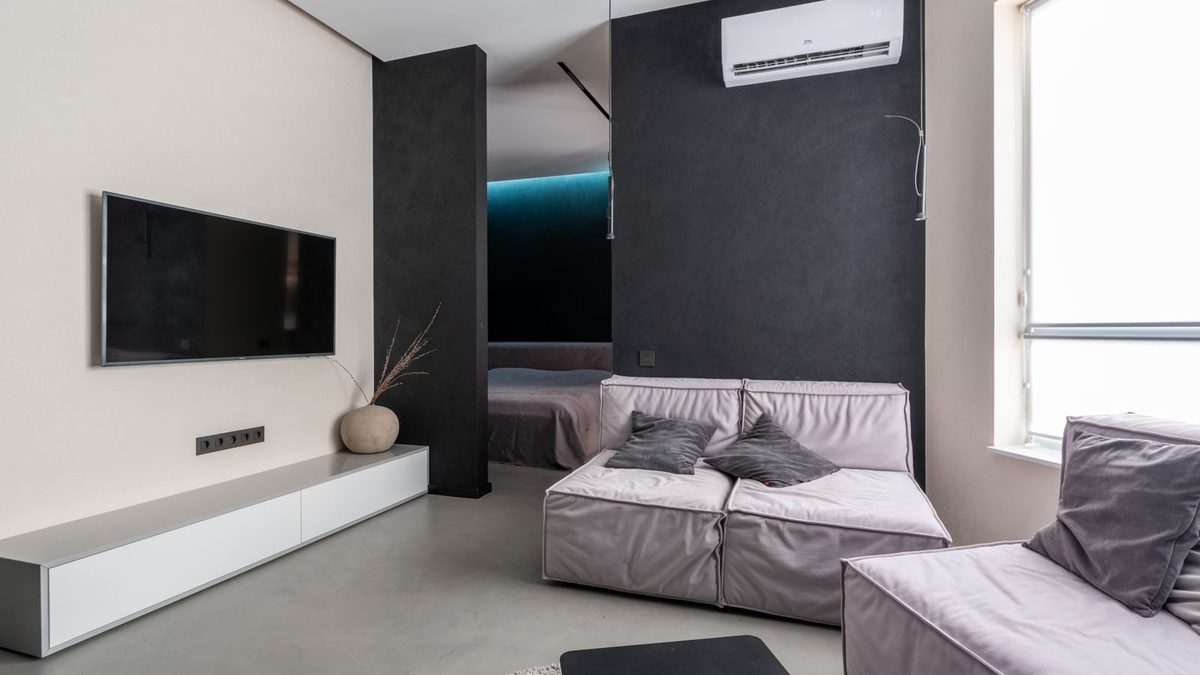
Switch on the wall-mounted unit in a Bishan Street 22 flat after three weeks of running it daily and you'll often hear it before you see it - a faint rattle from the fan blade, then a visible puff of grey dust drifting across the ceiling light. Ask the resident and they'll usually say the same thing: "I just serviced this a few months ago." That's the trap. Bishan aircon dust after weeks isn't really about whether you serviced the unit recently. It's about what happens to the filter and the coil behind it between one rinse and the next, especially in a mature estate where the air outside the window is already carrying more than you'd think.
Bishan sits close to a sprawling park, several older point blocks dating back to the 1980s, and a stretch of the PIE that funnels traffic dust toward Marymount and Sin Ming. None of that is dramatic on its own, but it adds up fast once you're pulling that air through a filter mesh every single day. Add Singapore's average outdoor humidity of 70 to 90 percent, monsoon stretches where it sits above 85 percent, and you've got a filter that's not just catching dust - it's catching dust that's slightly damp, which clings harder and breaks down less easily than the dry stuff. For households with young kids, asthma, or anyone who's noticed more sneezing right after the aircon kicks in, this isn't cosmetic. Indoor air in a poorly maintained home can run two to five times more polluted than the air outside it, and a clogged aircon filter is one of the easiest ways that happens without anyone touching a broom.
The good news is that this is one of the more fixable problems in a Bishan flat, provided you understand what's actually accumulating and how often it needs attention. The bad news is that most households are cleaning the wrong layer, wiping the visible panel while the real culprit sits one step further in.
Why Bishan aircon dust builds up again just weeks after a clean
Here's the part that surprises people: a wall-mounted unit running eight to ten hours a day in an HDB flat pulls air through its filter roughly the same number of times as a condo unit on a higher, more sealed floor - but the air it's pulling from is dirtier. Bishan's older blocks, particularly along Bishan Street 13 and the stretches near Marymount Road, sit lower and closer to ground-level traffic, corridor foot flow, and whatever construction is happening on a neighbouring unit's renovation at any given time. Corridor dust in these estates tends to run higher than in sealed condo lobbies, and every time a window's open for cross-ventilation, some of that finds its way into the filter mesh.
That's why the standard servicing cadence most Singapore guides repeat - rinse the filter every two to three weeks, or stretch to four if the unit runs lightly - exists in the first place. It's not an arbitrary number. It's roughly how long it takes for a fine layer of dust, pollen from the park greenery, and ordinary household skin cells to build into a mat thick enough to restrict airflow. Once that happens, two things go wrong at once: the unit has to work harder to push air through, which raises your electricity bill, and the trapped moisture on that mat becomes a small, dark, humid pocket - exactly the kind of environment mould needs to establish itself, which it can do in as little as 24 to 48 hours once conditions are right.
What's actually clogging inside the unit when the panel looks fine
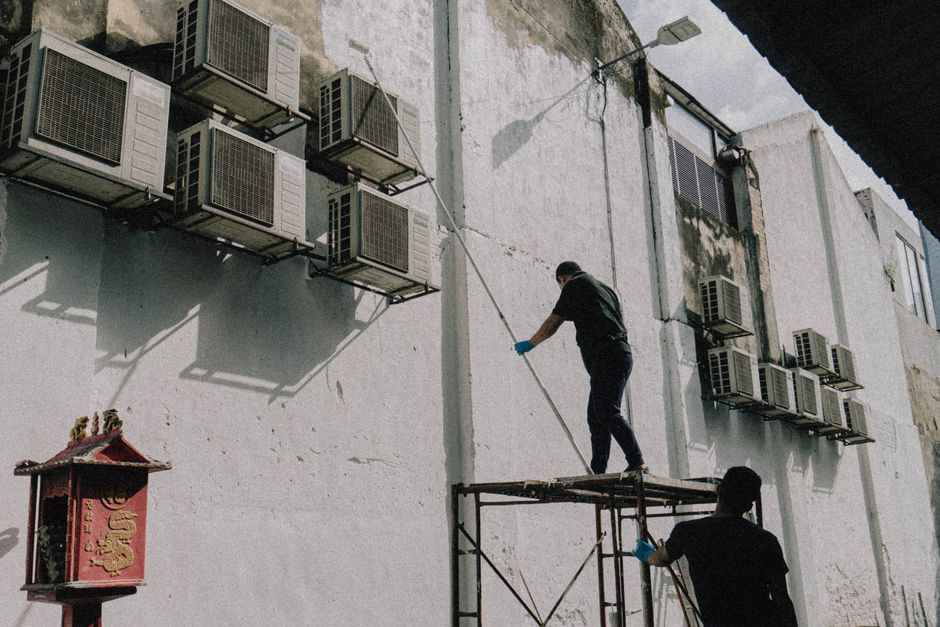
Pop open the front panel of almost any unit that's been running three or four weeks without a rinse and you'll find the filter looking obviously grey, which most people do catch. What they miss is the coil sitting just behind it. Dust fine enough to slip past a loosely fitted filter settles directly onto the cooling fins, and because that surface is cold and often slightly wet from condensation, dust sticks to it far more stubbornly than it does to the filter mesh. A quick wipe of the panel and a rinse of the visible filter can leave you with a unit that looks clean on the outside while the coil underneath is still coated.
This matters more during Singapore's monsoon stretches, roughly November through February, when condensate production inside the unit can rise by thirty to forty percent compared to drier months. More condensate means more moisture sitting against that dusty coil, more strain on the drainage pan, and in older Bishan units, a higher chance of a slow drip finding its way down a wall or, worse, into the flat below. This is also the point where it stops being a weekend DIY job. Flushing a filter is simple. Degreasing and descaling a coil, or clearing a partially blocked drain line, usually calls for either a dedicated aircon servicing specialist or a cleaning team that's trained to work around the unit safely without damaging the fins or triggering a leak.
The 20-minute filter rinse versus the deeper reset most flats skip
Most households already know how to rinse a filter. Fewer know how far that routine should actually go, and fewer still get to the dust that settles on the ceiling, the fan blades, and the wall surrounding the unit, which keeps re-seeding the filter the moment you put it back in. A proper reset covers the whole zone, not just the one component everyone remembers.
- Turn off the unit at the wall and let it sit for a few minutes before opening the front panel, so you're not handling a live component.
- Slide out the filter and rinse it under running water facing the opposite direction the air normally flows, which pushes trapped dust out rather than further into the mesh.
- Leave the filter to air-dry completely before reinserting it; a damp filter put back too soon just restarts the mould clock.
- Wipe the visible fins gently with a soft, dry microfibre cloth - never a wet one directly on the coil, since trapped moisture there is exactly what you're trying to avoid.
- Dust the ceiling area immediately surrounding the unit, including any nearby ceiling fan blades, since settled dust there gets pulled straight back into the filter once the unit restarts.
- Check the drip tray or visible drainage point for slow pooling, which is often the first sign a line is starting to clog before you notice a leak.
- Log the date somewhere visible - a sticky note on the remote works - so the next rinse happens on schedule rather than "whenever someone remembers."
If you're noticing a musty smell the moment the unit kicks on, water marks spreading on the ceiling near the unit, or a drip that wasn't there last month, that's past the filter-rinse stage and worth a proper inspection rather than another round of wiping. This is usually where bringing in a team that handles the surrounding ceiling, walls, and fan blades alongside the unit - rather than just the unit itself - makes the difference, and it's a job that pairs naturally with a broader spring cleaning service rather than a standalone wipe-down.
A weekend reset for the dust that settles around the unit, not just inside it
Bishan flats with high ceilings or open-concept layouts near the living room often have aircon dust migrating further than people expect - onto bookshelves, curtain rails, and the top of cabinets within a few metres of the unit. A weekend reset that only touches the aircon itself leaves that halo of settled dust free to drift right back in once the fan restarts.
- Start with the highest surfaces in the room - curtain rails, the top of wardrobes, and any shelving near the unit - working from ceiling height down so dust falls onto surfaces you'll clean next, not ones you've already finished.
- Vacuum soft furnishings within the unit's airflow path, since dust mites and settled particles collect there faster than on hard flooring.
- Run a damp microfibre cloth along window tracks and grilles, which in Bishan's older blocks often sit closer to the park's pollen and leaf litter than newer developments further from greenery.
- Finish with the floor last, once everything above it has already been wiped down, so you're not vacuuming dust that's about to resettle anyway.
Do this alongside the filter rinse rather than instead of it, and the gap between "feels dusty again" and your next scheduled clean stretches out considerably. Households juggling two jobs rarely have the bandwidth to do this every fortnight, which is exactly the kind of recurring, highest-impact reset a professional team can slot into a quarterly or post-monsoon rhythm.
What Customers Say
"I recently engaged MCAAS for a comprehensive spring cleaning of my entire house, and I couldn't be more pleased with the results. The team, led by Munisha, was exceptionally professional, efficient, and thorough. It was all completed within 6 hours."
- Allister Ngai
"I recently engaged their professional cleaning service and is very satisfied with their work. Ms Munisha took the effort to update me on the work progress as they carried out their work. Will definitely engage them again for future cleaning services."
- Louis Kok
"I utilized Spring Cleaning, and Munisha and the team did an outstanding job. Their effort in thoroughly cleaning the house was truly appreciated. Thank you, Munisha and team, for your fantastic support."
- Praveen Kumar P
FAQs About Bishan Aircon Dust After Weeks
Why does my Bishan flat's aircon get dusty faster than friends in newer condos?
Older blocks sit closer to ground-level traffic, corridor foot flow, and park greenery, all of which feed more particles into the air your unit pulls through every day. A sealed, higher-floor condo simply has less to draw from.
Is rinsing the filter enough, or do I need the coil cleaned too?
A filter rinse every two to three weeks handles the surface layer. The coil behind it needs attention less often, usually during a proper service, because that's where fine dust mixes with condensation and becomes harder to shift with a simple wipe.
Does running the aircon in dry mode reduce the dust problem?
Dry mode manages humidity inside the room, not the dust load inside the unit. The filter still needs its own rinse schedule regardless of which mode you run.
Why does the dust problem get worse during the monsoon months?
Condensate production inside the unit can rise by thirty to forty percent during wetter months, which means more moisture sitting against an already dusty coil and a higher chance of slow drips or odour.
Can a general home cleaning team handle the aircon unit itself?
A cleaning team can safely dust the panel, surrounding ceiling, and nearby fan blades, and support the surface-level filter rinse. Chemical coil overhauls and drainage repairs are best left to a dedicated aircon servicing specialist working alongside your cleaning schedule.
How do I know if it's time for more than a weekend wipe-down?
A musty smell on startup, visible water marks near the unit, or dust that returns within days rather than weeks all point to something beyond a routine rinse, and are worth a proper inspection.
Conclusion
We at MCAAS Solutions know that Bishan's older blocks and leafy surroundings make this a slightly different problem than it is a few MRT stops away, and that a quick wipe of the aircon panel rarely tells the whole story. There's something quietly satisfying about switching on a unit and hearing nothing but air, no rattle, no puff of dust catching the afternoon light. Contact us at +65 8834 2867, send a quick note on WhatsApp, or visit MCAAS Solutions to book a reset that covers the unit, the ceiling around it, and everything dust has quietly settled on in between.