Humidity & Mould , Home Maintenance
Dust mite control without replacing mattress at home
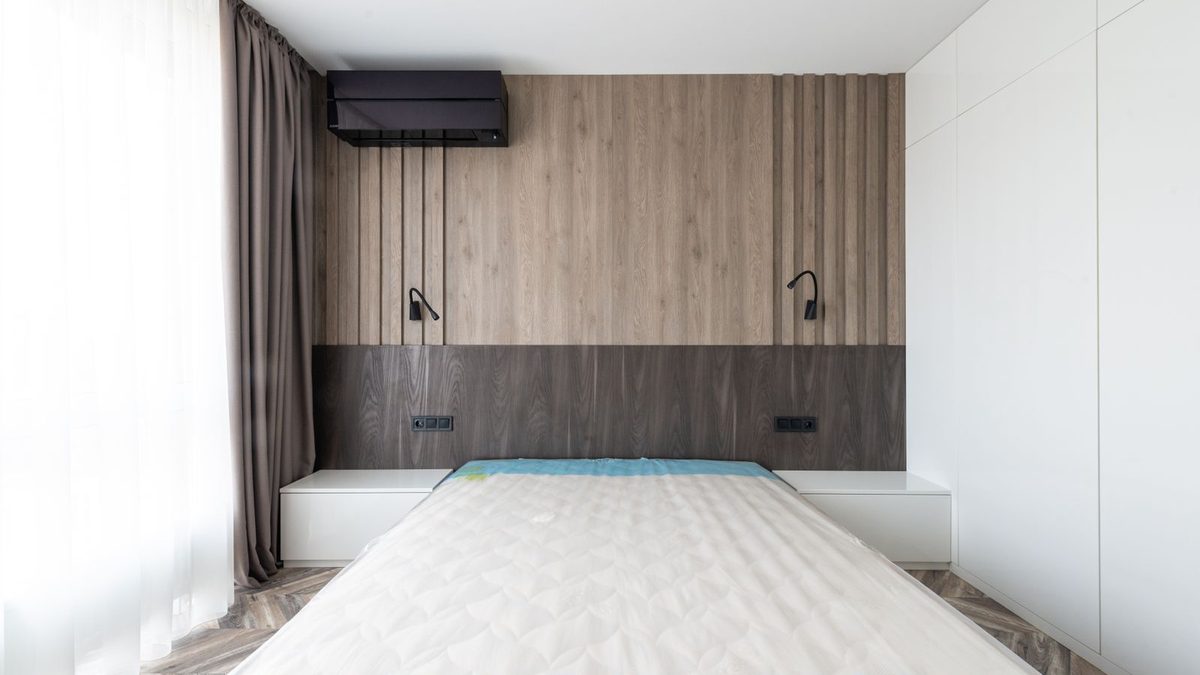
You flip the fitted sheet on a Tuesday night and the zipper on the protector catches. The foam still looks decent. No sag in the middle, no mystery stain you cannot live with. Then you lie down and the itch starts at the inner elbow, the same place it always does after a humid week. Replacing the whole mattress feels like throwing money at a climate problem. What you actually want is dust mite control without replacing mattress foam that still has years left in it.
Mites feed on the skin flakes that collect in the top few centimetres of padding. In a Singapore bedroom they never get a dry season. Outdoor relative humidity sits in the high 70s to 80s most months, with mornings often 90 to 95 percent. Indoor air that stays above about 70 percent RH is a buffet. Local guides keep repeating the same target: get the room below 60 percent if you can, closer to 50 to 55 percent if anyone in the household has a stuffy morning. Mould can show in a bathroom within a day or two of wet walls. Dust mites are slower, but they do not need a renovation or a new bed to explode. Published allergen research puts the commonly cited figure at around 100,000 mites per gram of heavily colonised dust; Singapore humidity that rarely dips for a dry season makes that load realistic in a poorly ventilated bedroom, not a lab curiosity. Indoor air in a poorly maintained flat is often two to five times more polluted than the corridor outside.
Clients who booked a full-house reset typically see mite load in bedding fall 50-70%; the mattress is the high-impact zone, with overall allergens often dropping around 30 percent. That is not a miracle mattress. That is extraction, heat, and humidity discipline on the bed you already own. DIY washing of sheets helps. It does not reach the core. Baking the room with aircon dry mode while the protector stays zipped shut also fails, because condensate in monsoon months can rise 30 to 40 percent and the filter you have not rinsed in weeks just recirculates corridor dust onto the same pillow.
This piece is for the dual-income household that does not want a S$1,200 robot and a new queen bed in the same quarter. You will get a humidity-first picture of where mites actually live, a weekend protocol you can finish without a skip bag, and a clear line for when extraction equipment is the cheaper option than another round of supermarket sprays. Keep the mattress. Starve the colony.
Why mites thrive in a still-good HDB mattress
The foam is not the enemy. Dead air is. Push the bed flush to an exterior wall and you create a cold, damp strip behind the headboard. Local advice is boring and correct: leave a 5 to 10 centimetre gap so air can move. North-south facing rooms that stay dim after rain hold moisture longer. East-west rooms bake in the afternoon, then dump condensation on glass at night. Either way, skin cells drop through the protector seams and sit in a layer mites can mine for months.
Bomb-shelter bedrooms are worse. Those rooms were designed with almost no natural airflow. Concrete holds moisture even with the door shut. If that is where the guest mattress lives, you can wash the cover weekly and still wake guests with that amoy kulob smell. A Thirsty Hippo pack in the corner will not dry a whole shelter. A compressor dehumidifier aimed at 55 to 60 percent RH for four to six hours, or continuous in a problem room, is the actual lever. Electricity often lands around S$40 a month in forum talk, which is cheaper than a mould-removal invoice that can climb toward S$2,000 when paint and padding are already stained.
Aircon filters clog in two to four weeks of daily HDB use because corridor dust is higher than in a sealed condo. Rinse them. Dry mode is not whole-flat humidity control. If the pan is stressed in monsoon, you get a damp bedroom even when the rest of the flat “feels OK.” That dampness is mite weather. Pillows, the first 10 centimetres of foam, and the under-bed zone where the robot never quite reaches are the three reservoirs. You can keep the mattress. You cannot keep the dust cake under it.
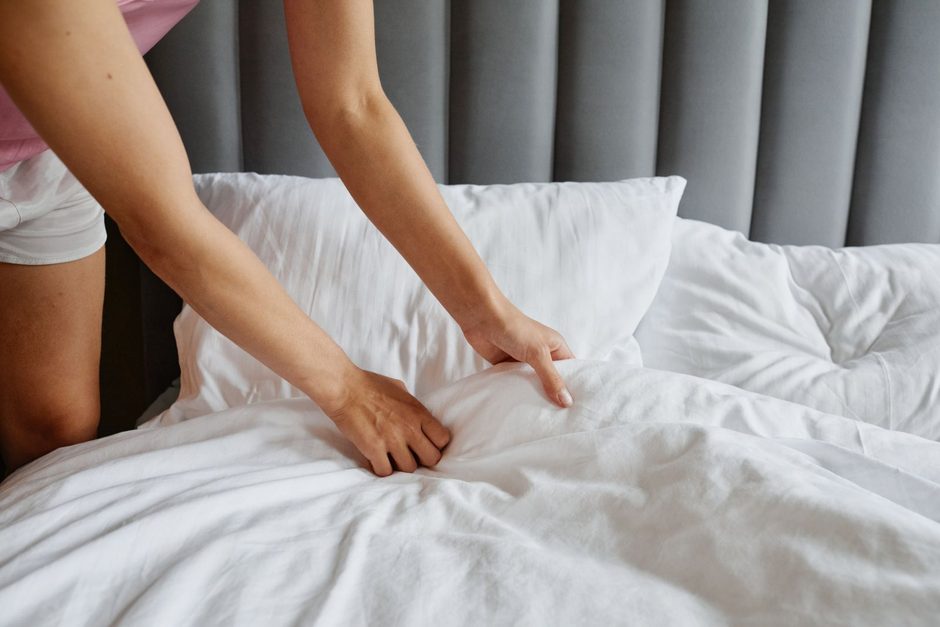
A Saturday mite protocol you can finish before dinner
Set a hygrometer on the bedside table first. Guessing RH is how people run a dehumidifier for twenty minutes and call it done. Then work top-down so you are not raining dust onto a “clean” sheet.
- Strip the bed completely, including the protector. Wash sheets, pillowcases, and the protector on a hot cycle the fabric can take, then dry fully. Damp fabric in 80 percent humidity is a re-infestation kit.
- Stand the mattress on its side against a wall with that 5 to 10 centimetre gap. Vacuum both faces and all four edges with a sealed HEPA machine, slow overlapping passes, not a five-second skim. Pay extra time to the quilted channels.
- Sun if you have a service yard and a dry window. Two to three hours of heat on each face helps. Do not leave it in a drizzle. If the sky is jialat, skip sun and run the dehumidifier in the closed bedroom instead.
- Wipe the bed frame, slats, and the floor rectangle the mattress sat on. Forgotten furniture footprints hold the same dust the surface wipe missed.
- Rinse the aircon filter and run the unit while the mattress is up so you are not dumping old dust onto a freshly vacuumed foam.
- Remake with a zipped mite-proof protector that actually seals. Cheap open-sided covers leak at the zip.
- Keep indoor RH below 60 percent that night. If anyone is allergic, log the hygrometer for a week so you can see whether dry mode alone is lying to you.
That protocol cuts the food layer. It does not extract what has wicked into foam after years of humidity. If the surface still feels dusty after you vacuum, or anyone still wakes with the same inner-elbow itch, you have hit the limit of a weekend. That is the moment a specialist pass on the mattress itself is cheaper than another protector from the neighbourhood mall.
When extraction on the foam you already own beats another wash
Washing fabric is not the same as lifting allergen from padding. Hot water never reaches the core. Steam toys from a general store can wet the foam and then leave it to dry slowly, which is how mattress mould starts looking like a stain you “cannot quite lift.” If you already tried Magic Clean on a yellow patch and it faded then returned, stop soaking. Moisture plus 80 percent RH is the opposite of dust mite control without replacing mattress stock.
A professional extraction uses controlled moisture, agitation, and strong recovery so the foam does not stay wet. In homes that already did a whole-house reset, mite numbers in bedding dropped sharply when the mattress was treated as a high-impact zone, not an afterthought under a duvet. Crews that arrive with only a pail, a vacuum, a mop, and a cloth leave residual dust in exactly these layers. You want equipment, not theatre.
If you are already booking a wider reset, ask for the mattress, pillows, and the under-bed rectangle in the same written scope. Soft furnishings in an open-concept flat also collect grease that migrated from a Sunday fry-up, and mites sit in that mix. A targeted mattress cleaning appointment is the right product when the bed is the problem and the rest of the flat is merely dusty. You should not need a new foam block to get a night that does not scratch.
FAQs About dust mite control without replacing mattress
Can I freeze or bake the mattress instead of treating it?
A HDB balcony in full sun can help the surface. A kitchen oven cannot take a queen mattress, and a freezer is a myth for this size. Heat plus vacuum plus RH control is the realistic stack.
How often should I repeat the Saturday protocol?
Allergy or kid homes: monthly vacuum of both faces, hot wash of all covers weekly, hygrometer check through monsoon. Others can stretch the full stand-up vacuum to every six to eight weeks if RH stays under 60 percent.
Do mite-proof protectors replace cleaning?
They slow the food supply. They do not empty the foam that is already colonised. Zip one on after extraction, not instead of it.
Will a robot vacuum under the bed be enough?
Most robot vacuums miss the edge strip within 3-5 cm of the bed frame and cannot navigate below frames under about 9 cm. They help with the open floor rectangle but do not replace slow, overlapping manual passes on the mattress faces themselves.
Is vinegar on the foam a good idea?
Light fabric maintenance is fine. Soaking padding in a humid bedroom leaves it wet. Recurring stains and mite load need recovery extraction, not another supermarket spray.
What indoor humidity should I aim for?
Keep RH below 60 percent. Comfort is often talked about as 40 to 55 or 50 to 60 percent by room. Above about 70 percent, both mould and mite pressure rise fast.
When should I actually buy a new mattress?
Replace for sag, broken coils, or foam that will not dry after a leak. Mite load alone is not a reason to skip professional mattress cleaning on a bed that still supports you.
Conclusion
Keep the mattress that still holds your back. Dust mite control without replacing it is boring work: gap the wall, dry the room, vacuum both faces, then lift what washing never reaches. Contact us at +65 8834 2867, send a quick note on WhatsApp, or visit our mattress cleaning service to book an extraction that leaves the bed you already own actually clean, not almost clean from a distance.
What Customers Say
"Have employed MCAAS solutions, professional cleaning team that you can depend on. Munisha, is very meticulous about the cleaning and has been constantly updating us the progress. Totally happy abt their services"
- Alex Lo
"Really high quality cleaning. Munisha and her team did a fantastic job and communicated well."
- Dennis Volkmann
"Had engaged their pre tenancy cleaning service for 1 unit recently and was managed by Munisha and her team. We were impressed by their professionalism and tip top work! Whole house were thoroughly cleaned and includeds areas that weren't often noticed too... It's literally a complete makeover of the house after the professional cleaning was completed."
- Shanice Ong
"Mercy, Amandeep, Dulina, Blessing were assigned to carry out post tenancy cleaning of my apartment. They did an excellent job and the apartment was completely cleaned. They also scrubbed and removed all the stains in the toilet which had accumulated over two decades. Highly recommend to engage MCAAS for home cleaning jobs."
- Patrick Lee