Room-by-Room Guide to End-of-Tenancy Cleaning in Singapore
Handover cleaning is easier to get right when you work room by room instead of task by task. Each room in a Singapore rental fails inspection for different reasons — grease in the kitchen, limescale and mould in the bathroom, scuffed walls in the living room, stale odours in carpets. This guide walks through every room with practical fixes for the stains, smells and floor problems that actually cost tenants their deposits. If you would rather hand the whole job over, MCAAS Solutions offers end-of-tenancy cleaning from $248, with the team bringing all equipment and running a final inspection before they leave.
Who this guide is for
Tenants in HDB flats, condos or landed rentals doing most of the handover clean themselves, who want to know exactly what to do in each room — including tough stains, lingering odours, carpets and different floor types. If you just want a tick-box list, start with our end-of-tenancy cleaning checklist and come back here for the how-to detail.
The kitchen: degrease first, then clean
The kitchen takes the largest share of any handover clean — often 30–40% of the total time — because cooking grease bonds to surfaces and needs soaking time, not just wiping. Work top-down:
- Cooker hood and extractor fan. Remove the filters and soak them in hot water with degreaser for 20–30 minutes before scrubbing. The housing above the hob collects a sticky film a dry cloth only smears — spray degreaser, wait, then wipe.
- Hob and oven. For baked-on carbon, apply a baking-soda paste, leave it 15 minutes, then scrub with a non-scratch pad. No metal scourers on glass or stainless surfaces.
- Cabinets, inside and out. Empty every cupboard and wipe the interiors — landlords open them. Grease settles on the tops of wall cabinets too.
- Sink and drain. Descale the tap, scrub the sink, and pour hot water with baking soda and vinegar down the drain to kill sour odours rising from the trap.
- Fridge and washing machine (if provided). Defrost the fridge, wipe it dry and leave the door ajar so it does not smell musty at inspection. Run the washing machine empty on a hot cycle and wipe the mould-prone door seal.
Stain notes: turmeric and curry stains on laminate countertops fade with a baking-soda paste left to sit; avoid undiluted bleach on coloured laminate. Grease spots on walls behind the hob usually lift with sugar soap.
The bathroom: limescale, mould and grout
Constant damp and water spotting make bathrooms the second-biggest deduction zone. Three problems dominate:
- Limescale. White crust on taps, shower screens and shower heads dissolves with a descaling product or white vinegar left to sit for 15–30 minutes. Squeegee shower screens afterwards to prevent fresh spotting.
- Mould. Black spots on silicone sealant and ceiling corners need a mould remover, not just bleach-and-wipe — surface wiping leaves the roots, and it returns before your inspection. Ventilate well while treating.
- Grout. Discoloured grout lines respond to a stiff brush with a paste of baking soda and hydrogen peroxide. Work in small sections and rinse.
Then the standard pass: toilet from rim to base (including behind the bowl), mirror and vanity, floor traps cleared of hair, and exhaust vent dusted. Most bathroom odours come from the floor trap — flush it with hot water and disinfectant rather than masking with fragrance.
Living room: walls, windows and first impressions
This is where the landlord or agent forms their first opinion, and where wear-and-tear disputes usually start:
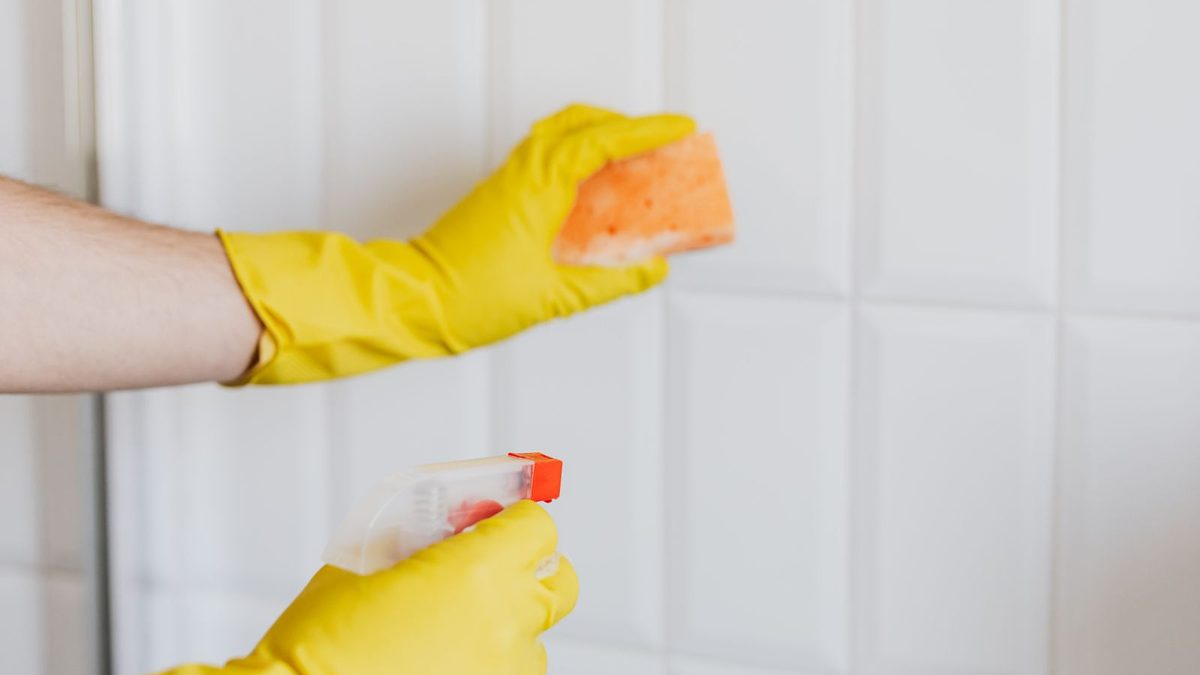
- Wall scuffs and marks. Try a damp microfiber cloth first, then a melamine sponge (“magic eraser”) used gently — it is mildly abrasive and can burnish matt paint if you scrub hard. Blu-Tack and tape residue lifts with a citrus-based remover, wiped clean after.
- Windows, grilles and tracks. Glass, frames, grilles and the dirt-packed sliding tracks — a vacuum crevice tool then a damp cloth clears tracks fastest.
- Ceiling fans and light fittings. Dust blades over a spread-out sheet; wipe switches and socket plates, which carry grey finger marks.
- Curtains and blinds. Vacuum curtains or send them for washing; wipe blinds slat by slat.
Bedrooms: wardrobes, mattresses and hidden dust
Bedrooms are quick but commonly failed on the hidden areas: inside wardrobes, on top of them, and under the bed. Empty and wipe every wardrobe interior, including shelves and rails. Pull the bed out and vacuum beneath it.
If the unit came furnished with mattresses, vacuum both sides and deodorise with baking soda left for an hour, then vacuumed off. Blot sweat or drink stains with diluted dish soap — never soak. For a visibly stained mattress or sofa, professional extraction cleaning (MCAAS offers upholstery and mattress cleaning from $98) is usually cheaper than the replacement cost a landlord may deduct.
Carpets and rugs: the folded-in deep clean
Carpet is where odours hide — it holds dust, pet dander and cooking smells long after the rest of the flat is clean.
1. Vacuum slowly, twice, in two directions. Fast passes only skim the surface pile. 2. Treat stains before shampooing. Blot (never rub) with cool water and a drop of dish soap for food and drink; use an enzyme cleaner for pet accidents, which breaks down the odour source instead of covering it. 3. Deodorise. Baking soda sprinkled on, left several hours, then vacuumed handles mild smells. 4. Deep clean wall-to-wall carpet or landlord-owned rugs. Rented shampoo machines work, but over-wetting is the classic DIY error — carpet that stays damp in Singapore’s climate turns musty within days. Professional hot-water extraction removes the water as it cleans; see MCAAS’s carpet and upholstery cleaning if the carpet is beyond a vacuum-and-spot-treat job.
Floors: match the method to the material
Using the wrong product on the wrong floor causes damage that costs more than the cleaning saves:
- Vinyl (common in HDB flats): sweep, then mop with a neutral cleaner. Avoid abrasive powders and undiluted bleach, which dull the surface; scuffs often lift with a melamine sponge used lightly.
- Ceramic and porcelain tiles: mop with standard floor cleaner; give dark grout lines the same baking-soda treatment as the bathroom.
- Marble and natural stone: neutral pH cleaner only. Vinegar, lemon and acidic descalers etch marble permanently — a common and expensive mistake.
- Parquet and timber: a well-wrung, barely damp mop with a wood-safe cleaner. Standing water lifts and warps wood.
- Laminate: as with timber, minimal water; never steam-mop laminate.
Everywhere, do edges and corners with the crevice tool before mopping — inspection eyes go straight to skirting lines. Finish hallways, the balcony (swept and washed down, drainage hole cleared) and the front door area last, so you are not walking dirt back through cleaned rooms.
Common mistakes that cost deposits
- Cleaning around appliances instead of behind them. Pull out the fridge, washer and cooker where possible — the grime strip behind them is a favourite inspection spot.
- Masking odours instead of removing the source. Air freshener fades within hours; drains, carpets and fridge interiors are where smells actually live.
- Wrong chemical, wrong surface. Bleach on coloured sealant, vinegar on marble, steam on laminate.
- Skipping high and low zones. Cabinet tops, fan blades, skirting and window tracks separate “cleaned” from “professionally cleaned” in a landlord’s eyes — see what landlords actually inspect for a checkpoint-by-checkpoint view.
- Wrong order. Clean top-down and finish with floors, or you will redo them.
When DIY is enough — and when to call professionals
DIY works when the unit is small, lightly used, unfurnished, and you have a full day or weekend plus the right products for each surface. It stops making sense when there is heavy kitchen grease, mould in sealant, stained carpets or mattresses, or a tenancy agreement that requires professional cleaning with a receipt — many Singapore leases do, and a DIY clean cannot produce one.
Professionals also bring what a household cupboard cannot: commercial degreasers, extraction machines for carpets and upholstery, and PHMB and QAC-based disinfectants. MCAAS is NEA Licensed and WSQ Course Certified, teams arrive with all equipment and supplies, and every job ends with a final inspection against the same standards a landlord applies.
Book a room-by-room professional clean
If the list above looks longer than the time you have, MCAAS Solutions handles end-of-tenancy cleaning across Singapore from $248, with transparent pricing and no hidden fees. WhatsApp us at +65 8834 2867 with your unit type and move-out date — quotes usually come back within two minutes. Once booked, the team arrives on time with everything needed, works through the unit room by room, and completes a final inspection before the landlord’s walkthrough. Rated 4.9/5 from 370+ Google reviews; you can also call (Mon–Sat, 8am–5pm) or email cs@mcaassolutions.com.
Frequently Asked Questions
Which room should I clean first when moving out?
The kitchen — it takes the longest, and its degreasers need soaking time you can use elsewhere. Then bathrooms, bedrooms and living areas, with floors done last so you never walk dirt back over finished rooms.
How do I remove cigarette or cooking smells before handover?
Treat the sources, not the air: wash or vacuum curtains, shampoo carpets, wipe walls with sugar soap, clear drain traps and clean the fridge interior, then ventilate for a day or two. Air fresheners alone wear off before the inspection does.
Can I shampoo the carpet myself?
Yes, if you spot-treat stains first and avoid over-wetting — carpet that stays damp turns musty quickly in Singapore’s climate. For wall-to-wall carpet, pet odours or set-in stains, professional hot-water extraction is more reliable and dries faster.
What should I never use on my rental’s floors?
Acidic cleaners (vinegar, lemon, descaler) on marble or natural stone, steam mops or excessive water on timber and laminate, and abrasive scourers on vinyl. When unsure, use a neutral floor cleaner and a well-wrung mop.
Does a professional end-of-tenancy clean cover stains and carpets?
MCAAS’s end-of-tenancy cleaning from $248 covers the full unit room by room, including floors, and ends with a final inspection. Carpet, mattress and upholstery extraction cleaning is available from $98 — mention it when you WhatsApp for a quote so it is scheduled in the same visit.