Deep Cleaning , HDB & Condo Living , Home Maintenance
Singapore Deep Cleaning: The Kitchen Corners Humidity Exposes First
A young couple moved into their 4-room HDB flat in Bishan last month and cooked their first proper meal on day three. By the following evening the familiar musty smell had returned along the tile line behind the stove. They had booked what the previous tenant called a deep cleaning singapore service before handover, yet the grease that humidity reactivates overnight was already back. This is the exact pattern that appears in kitchens across HDB blocks and condos when surface wiping replaces the slower work of disassembly and targeted disinfection.
Singapore’s 80–84 percent humidity keeps cooking residue soft and mobile. Within 24 to 48 hours that residue feeds mould along grout and inside appliance seams. Families notice the black lines first, then the sticky range-hood filters, then the faint smell that no amount of open windows removes. Children and pets spend the most time at floor level where settled particles accumulate, so the health stakes rise quickly when the hidden layers stay untouched. One family in a five-year-old Punggol Waterway Terraces unit learned this after their toddler developed persistent coughing that coincided with the return of the kitchen odour; the paediatrician traced it to elevated spore counts in the air samples they later collected themselves.
The 4-room HDB kitchen layout that traps residue under every appliance
Most HDB kitchens place the stove against a short wall with limited clearance on both sides. When crews do not shift the unit or pull out the lower drawers, grease settles into the 3–5 cm gap that never sees daylight. The same thing happens beneath the sink cabinet where condensation meets cooking vapour. A quick clean leaves these zones untouched; the next round of frying reactivates everything within two days.
Tenants who move in after such a clean often discover the problem only after the first week of normal cooking. The odour does not come from visible surfaces. It rises from the internal channels of the range hood and the unsealed edges of the floor tiles where previous residue still sits. A family of four who took over a 4-room flat in Clementi found the same issue after the previous tenant’s handover clean; they had assumed the kitchen was ready because the countertops looked wiped, yet within five days of stir-frying the grout lines showed fresh black speckling that no amount of daily mopping removed.
The hidden cost surfaces later when pest-control visits become necessary. Ant trails and small cockroach sightings frequently trace back to the same appliance gaps that standard crews never expose, turning a one-time cleaning shortfall into repeated service calls that compound both expense and frustration for new occupants.
Range hood filters and stove knobs that require full removal before disinfection
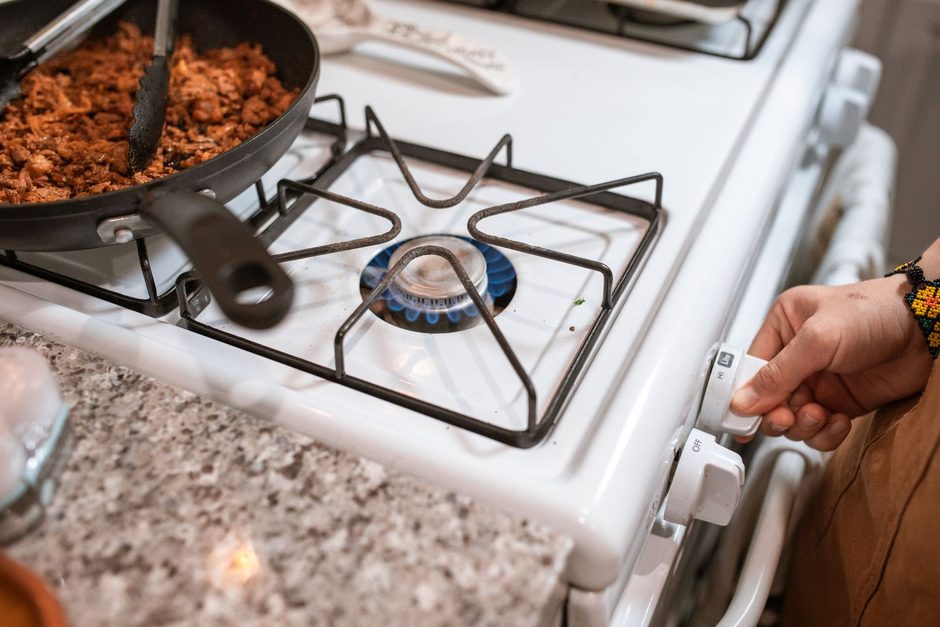
Effective work starts with taking the knobs off the hob and soaking them separately. The filters inside the hood must come out completely, not just wiped on the exposed face. Once removed they go into a degreasing bath that loosens the layered film that ordinary detergent cannot shift. Grout lines receive a dwell-time application so the disinfectant actually penetrates instead of evaporating on contact.
These steps take longer than a standard wipe-down and they cannot be rushed without leaving the cycle unbroken. NEA-licensed teams document each stage because the guarantee depends on reaching the layers that humidity will otherwise revive the same week. In one Toa Payoh 5-room flat, a crew spent 45 minutes on the hood alone after discovering three separate filter layers caked with hardened oil that had never been accessed in the previous two tenancies; the tenant later reported that the kitchen air felt noticeably clearer on the third day after cooking resumed.
A common failure mode occurs when teams skip knob removal and simply spray around the base. Residue trapped beneath the control panel continues to oxidise, releasing odours every time the hob heats up. Another trade-off appears with older HDB units whose original tiles have micro-cracks; without the correct dwell time the disinfectant never reaches the organic matter lodged inside those fissures, so black regrowth returns along the same lines within 72 hours even after an otherwise thorough visit.
Why hospital-grade products and 24–48 hour mould timelines change the outcome for families
Eco-friendly cleaners protect pets and children, yet they must still carry hospital-grade efficacy against mould spores that form so rapidly in Singapore kitchens. When the product is applied with proper contact time and the room is left to dry under controlled ventilation, the black regrowth along tiles slows dramatically. Families see the difference in the air quality within a few days rather than a few weeks.
One-off attempts with supermarket sprays rarely achieve the same dwell or coverage. The residue simply re-softens the next time the wok comes out. Data from local environmental testing shows that untreated kitchen surfaces in 80-plus percent humidity can see mould colony counts rise by two orders of magnitude inside 36 hours once cooking resumes, which explains why children with respiratory sensitivities often experience symptoms that coincide exactly with the return of kitchen odours.
The operational reality is that proper disinfection requires both the right chemistry and the patience to let it work. Crews that cut dwell times short to finish faster leave a thin film that humidity immediately rehydrates, restarting the cycle. In contrast, teams that follow the full protocol record fewer callbacks because the treated surfaces no longer provide the moisture and nutrients that spores need to re-establish within the first 48-hour window.
What Customers Say
“Overall did a pretty good job with the deep cleaning and curtains cleaning. I’m quite picky and I am quite satisfied with their work.”
— teenataz
“Thank you to Arun and Team 👍 Engaged them for cleaning services and they were very detailed to every spot. Also appreciate their patience when doing checks before handing over. Would recommend their cleaning services. Thank you 😊 Positive: Responsiveness, Quality, Professionalism, Value Services: Deep clean, Moving-related cleaning, Standard cleaning, Interior & exterior window cleaning”
— Esther Ng
“Very satisfied with the service provided by Ram and his team. Meticulous with his work and respectful with the owner’s needs and wants. Thank you!”
— Nor Liyana
“Multiple cleaning services offered. Engaged both their house cleaning as well as upholstery cleaning. Ram and Jashan are very efficient and meticulous with their cleaning.”
— Kim Hong Ng
FAQs About Deep Cleaning Singapore
How often should kitchens in HDB flats receive a proper deep cleaning singapore service?
Most households benefit from one thorough session every four to six months because daily cooking plus constant humidity rebuilds layers quickly. Kitchens used for heavy frying may need attention every three months.
Why does the smell return so fast after an ordinary clean?
Ordinary cleans leave grease inside hood channels and behind appliances. Singapore humidity keeps that film soft, so mould and odour reappear within 24–48 hours of normal use.
Do professional teams move the stove during a kitchen deep clean?
Yes. Shifting the hob and removing the lower drawers allows access to the gaps where residue collects. Without this step the hidden areas remain untreated.
Are hospital-grade disinfectants safe around children and pets?
The products used by licensed teams are both hospital-grade against mould and formulated to be family- and pet-safe once dry. Proper ventilation during application keeps exposure minimal.
What makes NEA licensing relevant for kitchen work?
NEA licensing confirms the company follows regulated standards for disinfectant use and waste handling, which matters when treating food-preparation surfaces.
Can homeowners achieve the same result with rented equipment?
Most home equipment lacks the extraction power and the correct dwell-time chemistry needed for layered grease. Results therefore fade faster than those from a full professional process.
Conclusion
We at MCAAS Solutions have watched the same kitchen patterns repeat across hundreds of HDB and condo units. Our WSQ-certified cleaners know exactly which seams and filters humidity will attack first, and our re-clean guarantee stands behind the work that actually stops the cycle. Contact us at +65 8834 2867 or reach us on WhatsApp to arrange a visit that reaches the layers most services leave behind.