Home Maintenance , Cleaning Tips
Cooker hood filter how often in Singapore kitchens

The smell that doesn't match the spotless stovetop is usually the first clue something's wrong behind the hood. A cooker hood filter in Singapore needs washing on a schedule most households underestimate by a wide margin: the metal mesh filter wants a soak every one to two weeks if you're cooking daily, and a charcoal or carbon filter on a recirculating hood is spent for good after three to six months, not wiped clean. A quick spray of degreaser on the hood's outer shell does nothing for the mesh trapping oil behind it. If the mesh has gone untouched for longer than a month, that's the kind of job a professional spring cleaning team can reset properly in one visit rather than something you chip away at over several weekends.
Most HDB and condo kitchens in Singapore run the hood on and off through at least one cooked meal a day, and that habit is exactly why the "wipe it when it looks dirty" approach fails. Grease doesn't announce itself visually until it's already caked solid inside the mesh, well past the point where a damp cloth helps.
The smell that doesn't match the spotless stovetop
You scrub the hob, wipe the counter, even run a damp cloth over the hood's exterior, and the kitchen still smells faintly of last night's fish curry two days later. That lingering smell is almost never coming from the stovetop or the counter. It's coming from inside the hood, where the metal mesh filter sits soaking up every bit of airborne oil your cooking produces, day after day, with no visible warning sign until it's genuinely caked. Open-concept kitchens make this worse because the smell and the fine grease particles don't stay contained to the kitchen zone; they drift into the living room and settle on your sofa fabric and curtains, which is why a kitchen that "smells clean" from the hallway can still carry a heavy odour an hour after you've finished cooking.
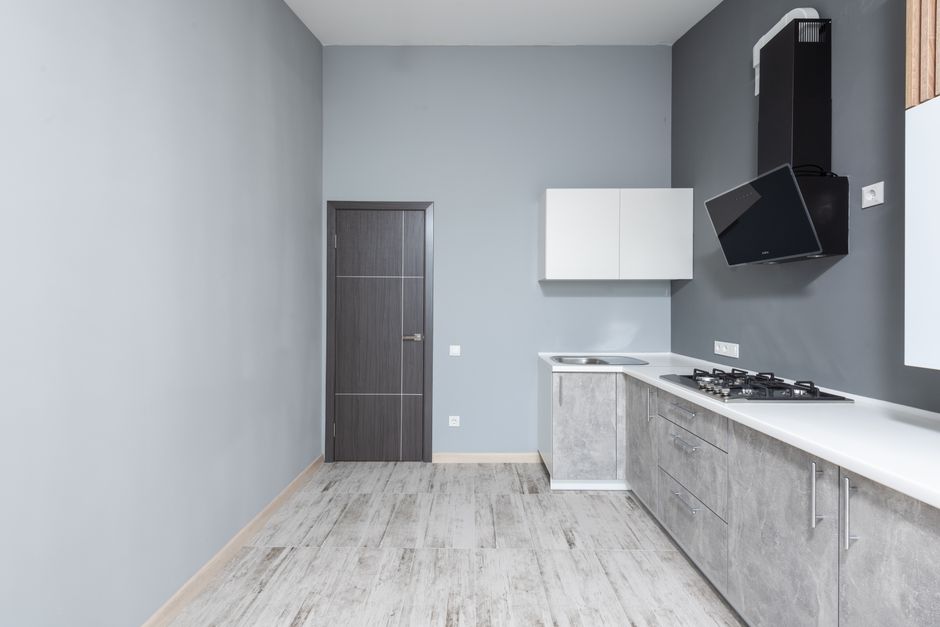
The exterior stainless steel or glass panel of the hood is easy to keep looking good, which is exactly the trap. It wipes clean in thirty seconds and gives the impression the whole unit is handled. The mesh filter sitting just behind it, pulling in smoke and oil vapour every time the motor runs, is doing the real work and getting none of the attention. If you've never actually removed the filter panel to look at the mesh underneath, there's a good chance it's past due for a proper soak right now.

How often should you wash a cooker hood filter in Singapore
The honest answer depends on how often you fry, steam, or stir-fry at home, not on a fixed calendar date. A household that cooks with oil daily, especially anything involving a wok or deep frying, should pull the metal mesh filter and soak it every one to two weeks. A household that cooks lighter meals, boils or steams more than it fries, or eats out several nights a week can usually stretch that to once every three to four weeks without the smell creeping back. Charcoal or carbon filters work differently: they're not washable in any meaningful sense, and once saturated with grease and odour compounds, they need full replacement, typically every three to six months depending on cooking frequency and the specific hood model.
A good rule of thumb for Singapore kitchens, where humidity keeps everything slightly tacky and grease never fully hardens the way it might in a drier climate, is to treat your cooking frequency as the clock, not the calendar. If last weekend was a big stir-fry cookout for Chinese New Year reunion dinner or a family gathering, that's a trigger to check the mesh regardless of when you last soaked it. The "Sunday fry-up" that's become a fixture in plenty of local kitchens is exactly the kind of session that loads a filter faster than a month of lighter cooking would.
A 20-minute degrease you can do before your next stir-fry session
Soaking a metal mesh filter properly doesn't take long once you've got the routine down, and it's one of the few kitchen jobs where doing it right actually takes less effort than doing it badly with a dry scrub. Here's the sequence that actually lifts the caked grease instead of just smearing it around the mesh:
- Switch off the hood at the wall and let it cool fully before touching any part of the filter assembly, since grease stays slightly warm and more likely to smear when the unit has just been running.
- Release the mesh filter from its clips, which on most Singapore HDB and condo hood models sit along the front edge and release with a firm push or a quarter-turn, depending on the brand.
- Fill a basin or your kitchen sink with hot water and a generous squirt of degreasing dish soap or a dedicated kitchen degreaser, hot enough that you'd need gloves to keep your hands in it comfortably.
- Submerge the mesh filter fully and let it soak for at least 15 to 20 minutes, longer if it's been more than a month since the last wash or if the grease layer looks dark and thick.
- Scrub gently with an old toothbrush or soft brush along the mesh grooves, where grease tends to collect in a way a sponge alone won't reach.
- Rinse thoroughly under running water and let the filter air-dry completely before reinstalling it, since trapping moisture behind a damp filter invites its own problems in Singapore's humidity.
This whole process costs you almost nothing beyond dish soap and twenty minutes, yet it's the single step most households skip entirely because the filter is hidden and the hood looks fine from the front. If you're already behind by two or three months, the grease may have hardened past the point where a soak alone lifts it, and that's usually when a baking soda paste or a stronger degreaser needs to come into play before the scrub stage.
What happens when the mesh goes two months without a soak
A filter that's gone neglected for an extended stretch doesn't just smell worse; it stops working the way it's meant to. A caked mesh restricts airflow through the hood, which means the motor has to work harder to pull the same amount of smoke and steam out of your kitchen, and it means less of that smoke actually gets extracted in the first place. The result is a kitchen that holds onto cooking smells and fine grease particles for longer, which then settle onto nearby cabinet surfaces, the extractor housing itself, and in open-concept layouts, the soft furnishings in the adjoining living space. A few signs point to a filter well past due even if you haven't pulled it out to check:
- The kitchen still smells noticeably of your last meal more than an hour after you've finished cooking, even with the hood running the whole time.
- A fine, slightly sticky film has started to appear on nearby cabinet doors or the wall tiles directly behind the stove, which usually means grease is escaping past a saturated filter rather than being captured.
- The hood sounds louder or more strained than it used to, which often points to restricted airflow through a clogged mesh rather than a motor fault.
- Visible grease drips or pooling appear on the underside of the hood housing itself, a sign the mesh has stopped absorbing and is now letting oil run straight through.
None of these signs require a technician to diagnose, but they do mean the DIY soak-and-scrub routine above has probably been skipped for a while. If your kitchen has reached that stage and the rest of the flat has picked up a general film of dust and grease drift along with it, that's usually the point where a full reset through a spring cleaning service makes more sense than trying to catch up on your own over several weekends.
What Customers Say
"Took a spring cleaning service for my condo. I appreciate Ms. Aman Preet for her dedicated work. The floor is shining and spotless, kitchen is degreased. Thank you. This is my 2nd time using their services and I will definitely choose them again."
- Mamta M
"I utilized Spring Cleaning, and Munisha and the team did an outstanding job. Their effort in thoroughly cleaning the house was truly appreciated. Thank you, Munisha and team, for your fantastic support. A special thanks to Subbiah for his prompt response and excellent coordination, which was highly commendable and appreciated."
- Praveen Kumar P
"Great attention to details and most importantly Munisha and team make sure all corners are clean before heading off. Munisha and team also helped to point us defect that we didn't notice before because they do all deep cleaning. Thank you so much! I will surely engage the company again if I need cleaning service"
- Debby
FAQs About Cooker Hood Filter Cleaning in Singapore
How often should I wash my cooker hood filter if I cook every day?
A metal mesh filter in a household that cooks with oil daily should be soaked and scrubbed every one to two weeks. Stretching it past three weeks usually means grease has already hardened past a simple soak.
Can I wash a charcoal cooker hood filter the same way as a metal one?
No, charcoal and carbon filters aren't washable and need full replacement, typically every three to six months. Washing one only wets the charcoal without restoring its ability to absorb odour.
Why does my kitchen still smell even though I wipe the hood weekly?
Wiping the exterior shell doesn't touch the mesh filter sitting behind it, which is where grease actually accumulates. The smell persists because the mesh, not the surface you're cleaning, is the saturated part.
Does a recirculating hood need a different cleaning schedule from one that vents outside?
Yes, recirculating hoods rely more heavily on the charcoal filter since they don't exhaust air outdoors, so that filter needs closer attention and more frequent replacement. Ducted hoods that vent outside still need regular mesh washing but typically don't use a charcoal filter at all.
Will a clogged filter damage my cooker hood motor over time?
A caked mesh forces the motor to work harder against restricted airflow, which can shorten its lifespan over months or years of neglect. It won't fail overnight, but the strain is cumulative.
Is there a point where DIY washing no longer fixes a grease-caked filter?
If the mesh has gone two months or more without a soak, hardened grease may resist even a strong degreaser and extended soak. At that stage, a professional deep clean of the whole kitchen zone is usually faster than repeated DIY attempts.
Conclusion
We at MCAAS Solutions see the same pattern in kitchen after kitchen across Singapore: a hood that looks spotless from the outside while the mesh behind it has been quietly collecting months of grease nobody thought to check. It's an easy thing to overlook precisely because it's hidden, and by the time the smell gives it away, the fix usually takes longer than it would have a few weeks earlier. Getting the mesh filter onto a proper one to two week rhythm, and the charcoal filter onto its three to six month replacement cycle, keeps your kitchen from becoming the room the rest of your flat smells like.
If your hood, kitchen cabinets, and the grease drift onto nearby soft furnishings have gone past the point a weekend scrub can fix, contact us at +65 8834 2867, send a quick note on WhatsApp, or visit our spring cleaning service to get the whole kitchen, filter included, properly reset.