Home Maintenance , Cleaning Tips
Jurong West kitchen grease cleaning: why it keeps returning
Fry fish on a Tuesday night in a Jurong West flat and by Thursday the smell is still sitting in the kitchen towels, the curtain nearest the window, and somehow the sofa cushion two rooms away. If you've lived in this town for a while, you already know the drill: the exhaust fan whirs, the window stays cracked open, and the grease still wins. Jurong west kitchen grease cleaning isn't a niche problem. It's a near-universal one in a town built on a mix of older three-room flats with tight enclosed kitchens and newer BTO blocks where the kitchen opens straight into the living room.
Part of this comes down to how Jurong West was built out over four decades. Blocks around Jurong West Street 52, 61, and 81 went up with sealed, compact kitchens designed for a single cook and minimal airflow. Newer developments near Boon Lay and the Jurong Lake District side opened the kitchen up as part of the living space, which looks great on a floor plan but means grease particles from a single wok session now have a straight shot at your sofa fabric, your TV console, and the fan blades above your dining table. Add Singapore's year-round humidity, sitting at a monthly average in the high 70s to 80s percent, and you've got the perfect medium for grease to bind to surfaces instead of wiping off clean.
There's also the proximity factor. Jurong West has one of the highest concentrations of hawker centres and wet markets in the west, and low-floor or corridor-facing units often pick up ambient cooking smoke that settles on window grilles and exterior air-con units long before anyone turns on their own stove. For households that cook daily, the kitchen exhaust hood becomes the single biggest source of lingering grease smell in the entire flat, even when the stovetop itself looks spotless. The mesh filter inside that hood is doing the real work, and it's the part almost nobody actually looks at.
Why the hood looks clean but the kitchen still smells like last night's dinner
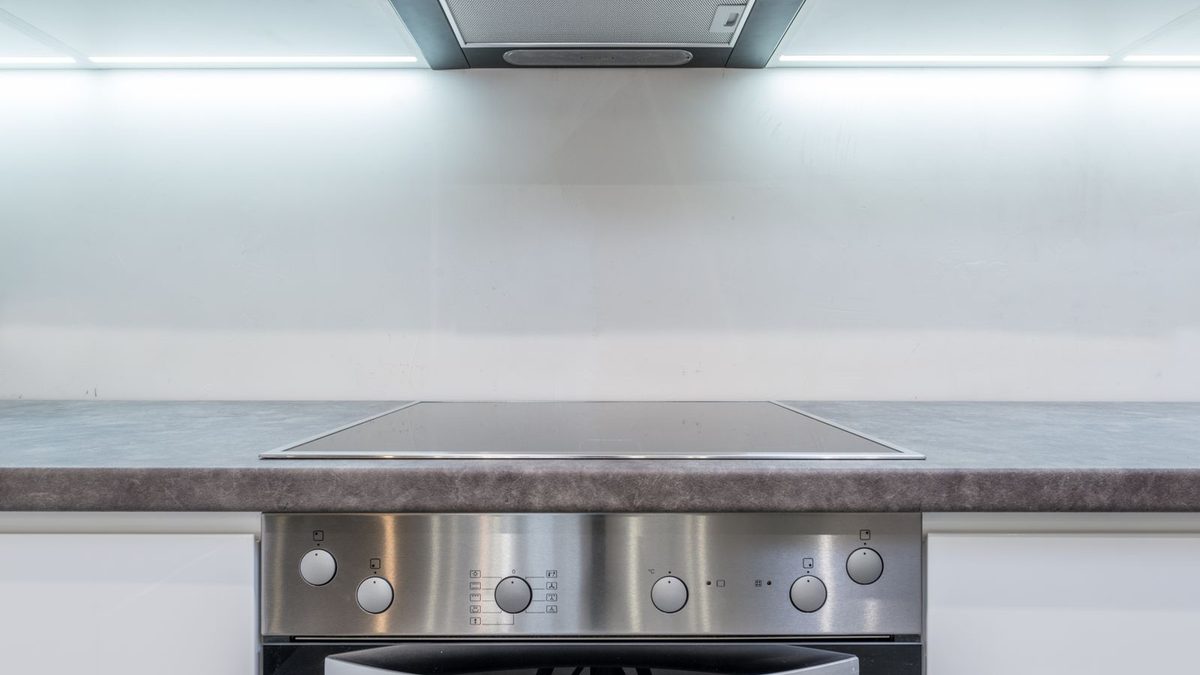
Here's the disconnect that catches most Jurong West households off guard. You wipe the exterior casing of the cooker hood, maybe once a week, and it looks fine. Stainless steel shines, no visible grime. But the metal mesh filter sitting just inside that casing is a different story. That mesh is designed to trap airborne grease before it reaches your ceiling, and after a few weeks of regular cooking it's caked solid, no longer filtering anything, just recirculating greasy air back into the room. If your hood has a secondary carbon or charcoal filter for recirculating systems, that one saturates even faster and needs replacing roughly every three to six months, not wiped.
This is why a kitchen can smell "off" even right after a full wipe-down. The smell isn't coming from the counter or the stove. It's coming from inside a filter you haven't touched since you moved in. For households in older Jurong West flats with smaller, enclosed kitchens, this problem compounds because there's less air volume to dilute the smell in the first place. A two-burner stir-fry fills the whole room before the exhaust catches up.
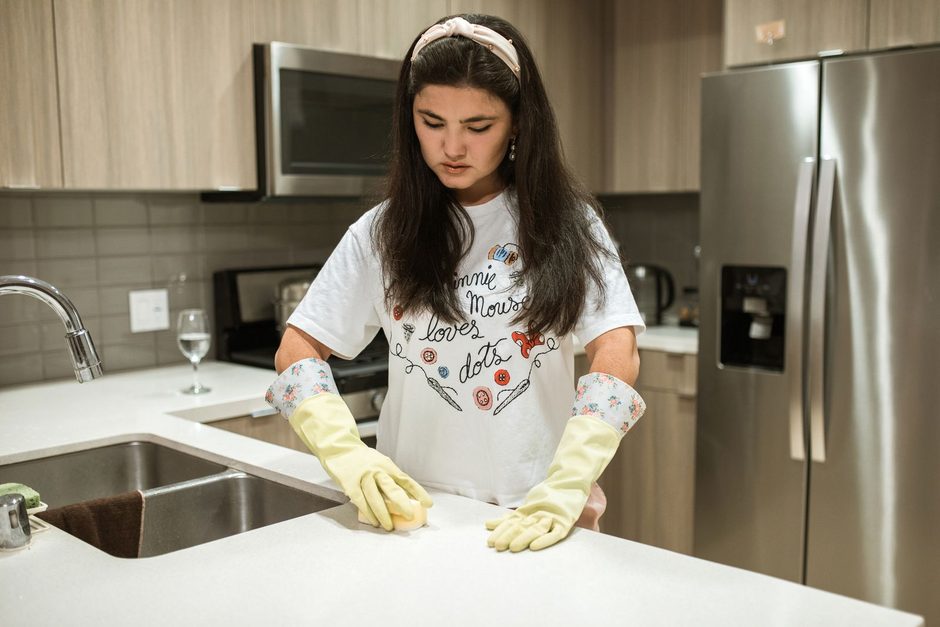
The weekend routine that actually gets the mesh clean
Most people skip this because it feels like a bigger job than it is. In practice, a proper mesh degrease takes under 30 minutes once you've done it a couple of times, and it makes a noticeable difference by the time you cook your next meal. Here's the sequence worth following:
- Switch off the hood and let it cool fully before touching anything, especially if you've just finished cooking.
- Unlock and slide out the metal mesh filter panels, usually by releasing two clips on the underside of the hood.
- Soak the panels in a basin of hot water mixed with a degreasing dish detergent or a dedicated kitchen degreaser for at least 20 minutes, longer if the grease has visibly hardened.
- Scrub gently with an old toothbrush or a soft-bristled brush along the mesh grooves, where grease tends to collect thickest.
- Rinse thoroughly under running water and let the panels air-dry completely before reinstalling, since trapped moisture invites mould growth inside the hood casing.
- Wipe down the hood's exterior, the wall tiles directly behind the stove, and the switch panel beside the hob, which tends to stay slightly tacky from airborne grease even when it looks clean.
- If your hood uses a carbon or charcoal filter rather than a washable mesh, check the manufacturer's replacement window and mark a reminder, since this one simply cannot be washed back to working condition.
Doing this every one to two weeks if you cook daily, or every three to four weeks for lighter cooking households, keeps the hood doing its actual job instead of just making noise. Skip it for a couple of months and you're not just dealing with smell. You're dealing with grease that's hardened into a layer the detergent soak alone won't shift, and at that point most households end up reaching for stronger solvents that can discolour the metal.
What happens when grease migrates past the kitchen wall
Open-concept layouts common in newer Jurong West BTOs change the maths entirely. Without a wall separating the kitchen from the living area, airborne grease doesn't stay contained. It settles on the ceiling fan blades above the dining table, works its way into sofa fabric fibres, and leaves a faint film on glass cabinet doors that you only notice when sunlight hits it at the right angle. This is why households with semi-open kitchens often report that cleaning feels like a losing battle: they're scrubbing the stove, but the smell and residue have already spread two rooms over.
If this sounds familiar, the fix isn't more frequent spot-cleaning. It's running the exhaust during and for about 15 minutes after cooking, keeping a kitchen window cracked for cross-ventilation where the layout allows, and periodically addressing the areas grease actually travels to, not just the stove itself. This is also where bringing in a professional team makes a real difference, because a thorough reset covers the hood mesh, the ceiling fan, the cabinet exteriors, and the fabric surfaces that absorb grease without anyone noticing until the smell builds up. A team like MCAAS Solutions treats the kitchen as a system that spreads outward, not a single surface to wipe.
Signs your kitchen has moved past a weekend DIY fix
There's a point where soap and a toothbrush stop being enough, and recognising it early saves you from a much bigger scrub-down later. Watch for these signals in your own flat:
- The mesh filter stays visibly discoloured or sticky even after a full soak and scrub cycle, which usually means grease has hardened into layers the detergent can't break down anymore.
- You notice a faint oily film on the glass cabinet doors or the TV console in an open-concept layout, which means grease has already migrated well past the cooking zone.
- The exhaust fan sounds noticeably louder or weaker than it used to, which can mean the internal motor housing has a grease buildup restricting airflow.
- Cooking smells linger for more than a day after a single meal, suggesting the filtration system is no longer doing meaningful work.
- You've skipped the mesh clean for more than two months and the thought of tackling it now feels overwhelming rather than routine.
Once a kitchen reaches this stage, a one-off professional deep clean resets the baseline so your regular weekend habit can actually keep up again, rather than fighting an ever-growing backlog.
What Customers Say
"Engage MCAAS for their deep cleaning services. Their team leader i believe was Munisha, she deligate the jobs well. She at random also will conduct an after check on their colleagues and will voice out to them if a spot were miss out or still not her or their standard... Really thankful for that!"
- Nizar Exile
"We engaged the moving in cleaning services on 19 August. They arrived punctually in the morning with around 5 cleaners. We felt that the cleaning was extremely satisfactory and professional. They took special care in cleaning every rooms and even scrubbing in between the tiles."
- Zhangmin Cheng
"Really very accommodating, and super fast and efficient! From getting a quote and even delivering on an urgent basis (same day btw). Couldn't have been more greatful enough. Thanks again to these wonderful ladies for making the shop spotless!"
- Francis Fariz
"Where on time, did great job cleaning(wish they were company to clean before my move in year ago). Cleaned curtains on site with hot steam which suits LL's requirements. Special thanks to Amanpreet and Nan for great job."
- Viacheslav Pelevin
FAQs About Jurong West Kitchen Grease Cleaning
How often should I clean the cooker hood mesh in a Jurong West flat?
If you cook daily, aim for every one to two weeks. Households that cook a few times a week can stretch this to three or four weeks, but any longer than that and the grease tends to harden past what a simple soak and scrub will fix.
Why does my kitchen still smell greasy after I wipe everything down?
The exterior of the hood is rarely where the smell comes from. It's almost always the internal mesh or charcoal filter, which traps grease over time and needs its own dedicated cleaning or replacement schedule separate from your regular wipe-down.
Is an open-concept kitchen harder to keep grease-free than an enclosed one?
Generally yes, because there's no wall stopping airborne grease from reaching your living room furniture, ceiling fans, and fabric surfaces. Running the exhaust fan longer and addressing those surrounding surfaces periodically helps close that gap.
Can I use strong chemical degreasers on stone or laminate countertops?
Be careful here. Harsh solvents that work well on metal mesh can etch marble, granite, or quartz surfaces permanently. Stick to a neutral pH degreaser on stone and laminate, and save the stronger stuff for the hood parts themselves.
Does living near a hawker centre in Jurong West make kitchen grease worse?
It can, particularly for lower-floor or corridor-facing units. Ambient cooking smoke from nearby stalls settles on window grilles and exterior surfaces over time, adding to whatever grease your own cooking produces.
What's the difference between a washable mesh filter and a carbon filter?
A metal mesh filter can be soaked, scrubbed, and reused indefinitely. A carbon or charcoal filter absorbs odours and grease but can't be cleaned back to working condition, so it needs a straight swap every three to six months.
When should I call in a professional cleaning team instead of doing it myself?
If the mesh stays sticky after a thorough soak, if grease film has spread to cabinets or fabric in an open-concept layout, or if you've simply fallen more than two months behind on the routine, a professional reset is usually faster and more thorough than trying to catch up alone.
Conclusion
We at MCAAS Solutions have scrubbed enough Jurong West hoods to know that grease rarely stays where you cooked it. It travels, it hardens, and it waits for the one weekend you finally notice the smell has outlasted the meal by three days. The good news is that none of this needs a complicated fix, just a routine that matches how your kitchen is actually built and how often you cook. When the backlog gets ahead of you, or the mesh simply won't come clean no matter how long it soaks, that's the point to hand it to a team that does this every week. Contact us at +65 8834 2867, send a quick note on WhatsApp, or visit our spring cleaning service to get your Jurong West kitchen back to a state where the smell actually leaves when the meal does.